

Forex trading signals are alerts recommending specific currency pair trades. They act as potential trade ideas, but their true value depends on the provider's transparency, methodology, and proven performance. Evaluating signals requires a discerning approach focused on risk management and verifiable results.
Deconstructing the Forex Trading Signal
A Forex trading signal is essentially an actionable alert. It typically specifies a currency pair (like EUR/USD), an entry price, and crucial risk parameters such as a stop-loss and take-profit level. Some also suggest a recommended trade size. These alerts originate from various sources: experienced traders, specialized analytical firms, or automated trading systems. The underlying logic can be based on technical chart patterns, economic data releases, or a combination of factors. For example, a signal might suggest selling GBP/JPY at 195.50, with a stop-loss at 196.00 and a take-profit at 194.50. Understanding the 'why' behind a signal is as important as the signal itself. Without a clear rationale, it's difficult to gauge its reliability or learn from it. A trader receiving such an alert must consider if it aligns with their own market view. Blindly executing signals without this due diligence introduces significant risk. The most effective signals come from providers who offer insight into their analysis, turning an alert into a potential learning opportunity.

Transparency: The Foundation of Trust
A provider's commitment to transparency is paramount. This means being upfront about their trading strategy, the analytical methods used (e.g., moving average crossovers, Fibonacci levels, or reactions to specific economic news), and their overall risk management philosophy. A provider that obscures their methodology or offers vague explanations should be treated with extreme caution. Imagine encountering a signal service boasting exceptional profits but refusing to detail how those results were achieved. This lack of openness makes it impossible for you to verify their claims or understand the potential risks you might be taking on. Consider two providers: 'Alpha Signals' publishes detailed weekly reports explaining the market conditions and technical setups that led to their suggested trades, along with their stop-loss discipline. 'Beta Signals' simply sends out buy/sell alerts without any supporting information. As a trader focused on understanding and managing risk, Alpha Signals offers a much clearer picture of their operational approach. Trustworthy providers aim to educate their subscribers, not just provide raw data. This educational aspect is crucial for traders aiming to grow their own analytical capabilities. Without transparency, you are essentially operating on faith, a precarious position in financial markets.
Evaluating Performance: Beyond the Headlines
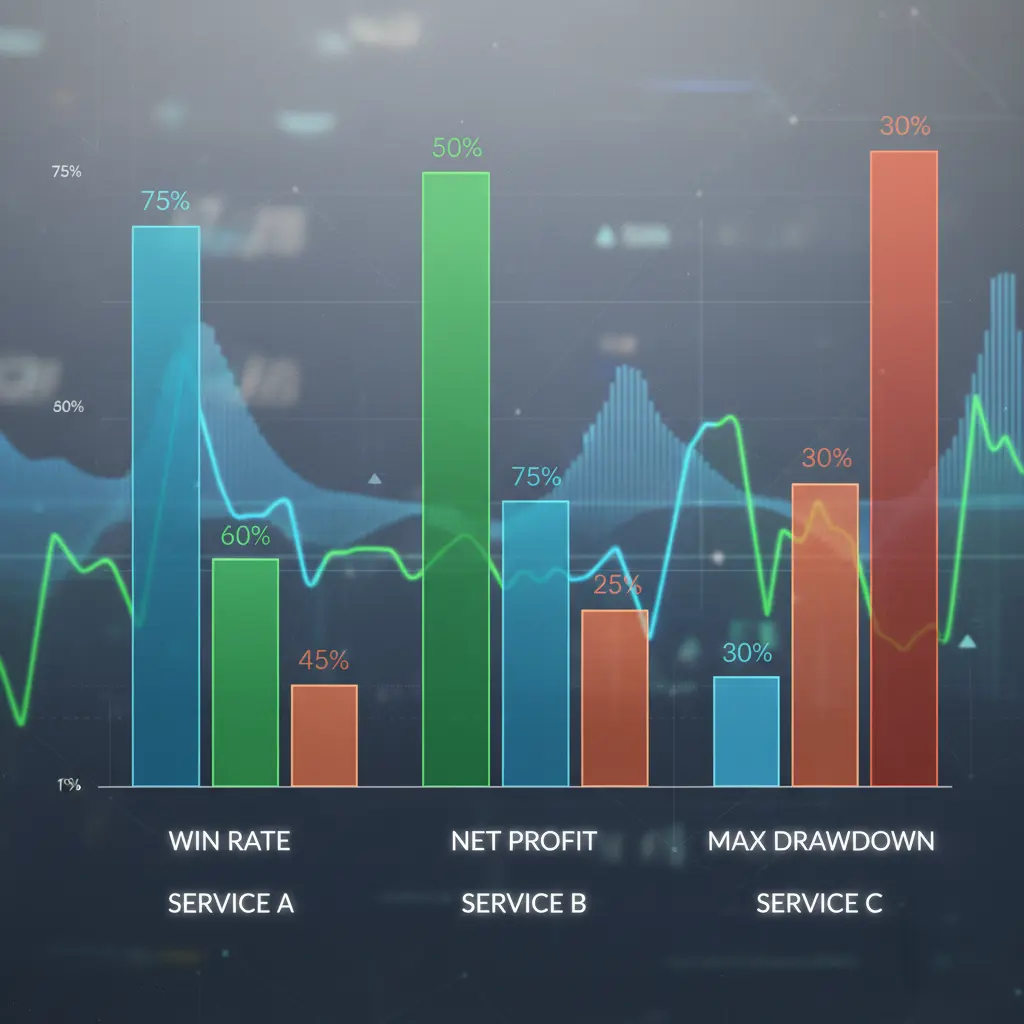
Headline profit figures from signal providers often paint an incomplete, and sometimes misleading, picture. It's essential to look beyond simple win rates and examine a broader set of performance metrics. Net profit, calculated after accounting for all trading costs like spreads, commissions, and slippage, is the ultimate measure of success. A service with an 80% win rate is less impressive if the 20% of losing trades erase all gains. Equally important is the maximum drawdown - the largest peak-to-trough percentage decline in equity experienced over a given period. A provider with a lower win rate but significantly smaller drawdowns might represent a more stable and capital-preserving approach. Be wary of backtested results; they often don't reflect the realities of live trading execution, such as market volatility and order execution delays. Verified live trading results, ideally through independent third-party services like Myfxbook or FXStat, offer a more reliable assessment. When analyzing performance data, consider the risk-reward ratio for each trade. A provider might have many small winning trades but a few large losing ones that negate the profits. For instance, Provider X claims a 95% win rate over a month, but their few losing trades were ten times larger than their average winning trades, resulting in a net loss for the month. This highlights the critical need to assess net profitability and risk management alongside win percentages.
Integrating Signals with Robust Risk Management
Even the most accurate signals can lead to substantial losses without a disciplined risk management framework. A responsible signal provider will emphasize the importance of position sizing and adherence to stop-loss levels. Their goal is to help users protect capital, not just chase profits. Suppose you receive a signal to buy USD/CAD with a recommended stop-loss of 70 pips. Without proper position sizing, a trader might allocate too much capital to this single trade, potentially risking a significant portion of their account if the market moves against them. A signal service focused on risk management would guide traders to calculate their lot size so that a 70-pip loss would equate to no more than 1-2% of their total trading capital.
Consider these practical scenarios:
- Situation: A signal suggests selling AUD/NZD, with a stop-loss set 40 pips above the entry price. Your trading account is $5,000.
- Recommended Option: Risk 1% ($50). You would calculate the appropriate lot size to ensure a 40-pip loss results in a $50 deduction from your account.
- Alternative Option: Risk 5% ($250). This higher risk level significantly increases the potential for rapid capital erosion if the trade fails.
- What to Avoid: Risking a fixed dollar amount that doesn't account for the stop-loss distance or using a percentage of equity that exceeds your predefined risk limit (e.g., 2%).
- Explanation: The recommended approach safeguards your capital by ensuring that even a losing trade has a manageable impact on your overall account balance.
Another common pitfall is ignoring take-profit levels. A signal might identify a target profit. Once that target is reached, securing the profit is generally prudent. Holding on for larger gains can turn a winning trade into a losing one if the market reverses. For instance, a signal for EUR/JPY recommends taking profit at 145.00. The price reaches 145.00; you exit with a profit. The alternative is to let the trade run, and the price subsequently drops to 144.50, wiping out your intended gain. The risk to avoid here is emotional attachment to a trade or succumbing to greed, which often overrides rational decision-making. Adhering to profit targets is a discipline, just like respecting stop-losses.
Who Benefits Most from Forex Signals?
Forex trading signals can be a useful adjunct for traders at various experience levels. They can be particularly helpful for newcomers who are still building their analytical skills or for seasoned traders seeking to identify opportunities that might have been missed. However, they are not a substitute for understanding market dynamics or for developing personal trading discipline. The decision to use signals should align with your trading temperament and objectives. For instance, a trader who is actively learning technical analysis might use signals to cross-reference their own findings, helping them validate their analysis or uncover new trading setups.
Here's a look at how signals might fit different trader profiles:
| Trader Type | Signal Appropriateness | Key Considerations |
|---|---|---|
| New Trader (Learning Basics) | Moderate | Use signals for educational insights, not as a primary trading strategy. Focus on understanding fundamental concepts first. See our Forex Basics guide. |
| Developing Trader (Active Analysis) | High | Signals can offer confirmation or alternative perspectives to their own analysis. Critical evaluation of the provider is key. |
| Experienced Trader (Established Strategy) | Low to Moderate | May use signals for confirmation or to spot niche opportunities outside their usual scope. Requires strict filtering. |
| Time-Constrained Trader (Limited Market Access) | Moderate to High | Can be beneficial if the provider is highly reliable and transparent, but requires oversight. |
| Risk-Conscious Trader | Low | May find the reliance on external sources and potential for provider error too risky. Prioritize self-directed strategies. |
| Trader Seeking Educational Value | Moderate | Signals can serve as case studies for market behavior, provided the provider explains their rationale clearly. |
If your trading approach prioritizes self-sufficiency and deep market understanding, signals might play a minor role. However, for those seeking additional trade ideas or a way to observe market reactions to specific setups, carefully vetted signals can be valuable. The effectiveness hinges on your ability to remain objective and disciplined. Using a trading journal can help document how signals are used and their impact on your overall performance.
Selecting a Credible Signal Provider
Choosing a reputable Forex signal provider requires careful vetting. Steer clear of services that guarantee unrealistic profits or employ high-pressure sales tactics. Seek out established providers with a verifiable history of performance, ideally validated by independent third-party auditing services. Many legitimate providers offer a free trial period, which is an excellent way to assess their service firsthand before committing financially. While customer reviews can offer insights, approach them with a critical eye, as many can be manipulated. A provider's responsiveness and communication style are also important indicators. Do they answer your questions clearly and promptly? Do they provide educational content? Do they openly discuss the risks involved in trading?
Consider this comparative scenario:
Situation: You are comparing two potential signal providers. Provider Alpha promises 40% monthly returns with no audited results. Provider Beta offers a 7-day free trial, provides audited performance data showing an average 8% monthly return with a 12% maximum drawdown, and details their trading strategy on their website.
Recommended Option: Select Provider Beta. Their realistic claims, verified performance, and transparent approach indicate a more trustworthy service.
Alternative Option: Subscribe to Provider Alpha based on their exaggerated profit claims.
What to Avoid: Paying substantial upfront fees for long-term access to services with unverified or questionable track records. Also, be cautious of providers that strongly push you to use a specific brokerage.
Explanation: Provider Beta demonstrates key traits of a reliable signal service: verifiable results, transparency, and a focus on realistic expectations, in contrast to Provider Alpha's red flags.
Ultimately, the most beneficial signal services are those that enhance your trading knowledge and decision-making, not those that foster dependence. To further develop your trading acumen, explore our section on risk management to understand how to protect your capital.
Signals: A Tool in Your Trading Arsenal
Forex trading signals can serve as a valuable component of a trader's strategy, but they are not a standalone solution. Their effectiveness is directly tied to the provider's integrity, clarity, and disciplined approach to risk. View signals as potential trade ideas or educational insights that require your own independent verification and integration into your personal trading plan. Relying solely on signals without understanding their basis or without implementing strict risk controls is a perilous path that can quickly deplete your trading capital. Always make capital preservation your top priority. A provider that prioritizes responsible trading and educates its users offers far greater long-term value than one making extravagant profit promises. Remember, consistent success in Forex trading is forged through knowledge, discipline, and sound risk management, not through passive acceptance of alerts. Track your progress and analyze the impact of signals on your trades by using a comprehensive trading journal.
Further reading: trading risk management | risk reward calculator