
Understanding forex limits, regulation, and risk is paramount for any trader entering the foreign exchange market. These elements directly impact your capital safety, trading execution, and overall profitability. Failing to grasp them can lead to significant losses and regulatory issues.
Why Forex Regulation Matters
Forex regulation acts as a crucial safeguard for traders. Regulatory bodies, such as the FCA in the UK, ASIC in Australia, or the CFTC and NFA in the US, set strict rules for brokers and financial institutions operating in the forex market. These rules are designed to protect clients' funds, ensure fair trading practices, and prevent market manipulation. Brokers must adhere to capital requirements, segregation of client funds, and transparent reporting. Without this oversight, traders would be more vulnerable to fraudulent activities and unfair dealings. For instance, a regulated broker is obligated to keep client money in separate bank accounts from the company's operating funds, meaning even if the broker faces bankruptcy, your deposited capital is protected. Unregulated brokers, conversely, operate without these checks, making them a significantly higher risk.
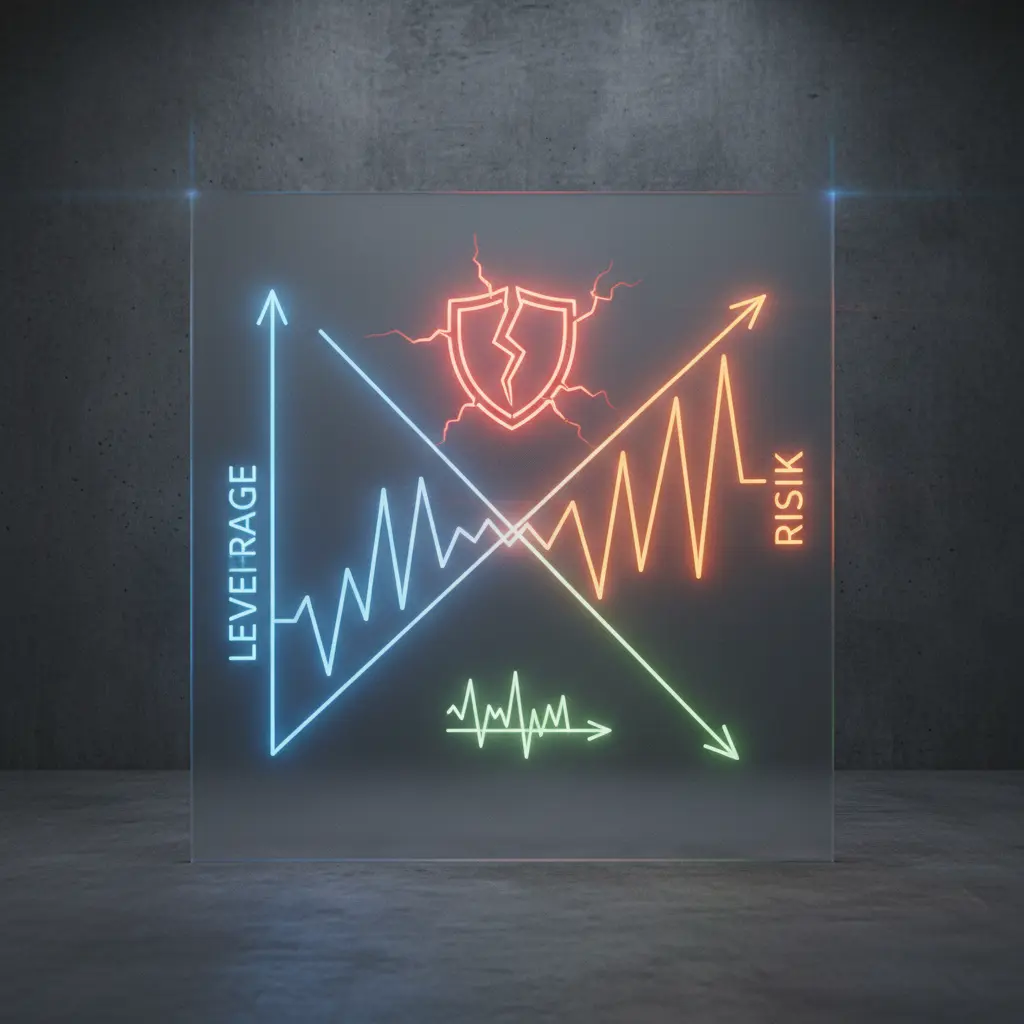
A common pitfall for new traders is being attracted by the seemingly high leverage offered by some offshore, unregulated brokers. While leverage can amplify profits, it equally amplifies losses. Regulation often imposes limits on leverage ratios to prevent traders from taking on excessive risk they cannot manage. For example, in the EU and UK, retail traders typically face leverage caps of 30:1 on major currency pairs. In contrast, unregulated entities might offer 1000:1 leverage, which, while tempting, is a huge red flag for risk management.
Understanding Forex Trading Limits
Forex trading limits can manifest in several ways, including leverage limits, margin requirements, and trade size restrictions. Leverage is perhaps the most discussed, allowing traders to control larger positions with a smaller amount of capital. However, regulatory bodies often impose limits on the maximum leverage a broker can offer to retail clients. For example, the ESMA (European Securities and Markets Authority) has introduced leverage caps for retail clients across the EU, generally setting limits at 30:1 for major currency pairs, 20:1 for minor pairs, and 10:1 for commodities. These limits are a form of risk management designed to prevent account blowouts from adverse market movements amplified by high leverage.
Margin requirements are another critical limit. This is the amount of money required in your trading account to open and maintain a leveraged position. If the market moves against your trade, your margin can be depleted, leading to a margin call or stop-out. Brokers calculate margin based on a percentage of the trade value, and these percentages are often dictated or influenced by regulatory guidelines. Understanding these requirements is vital for managing your account equity effectively. For instance, if a broker requires 2% margin for a EUR/USD trade, you need $200 in your account to control a $10,000 position.
Trade size limits can also exist, often determined by the broker's liquidity providers or internal risk management policies. While you might theoretically want to open a massive position, practical limits ensure market stability and the broker's capacity to handle such trades.
Scenario 1: High Leverage Temptation
- Situation: A new trader is looking at two brokers. Broker A (regulated by FCA) offers 30:1 leverage. Broker B (offshore, unregulated) offers 500:1 leverage.
- Recommended Option: Choose Broker A. The lower leverage, while seemingly limiting, protects against rapid account depletion.
- Alternative Option: Consider Broker B only if you fully understand the immense risks and have significant capital you can afford to lose, and accept the lack of regulatory recourse.
- What to Avoid: Blindly chasing high leverage without understanding its amplified risk and the lack of protection with unregulated brokers.
- Explanation: Regulated leverage limits are a safety net. Unregulated high leverage is a potential trap for inexperienced traders.
Key Regulatory Bodies and Their Impact
Different countries have different regulatory frameworks for forex trading. In the United States, the Commodity Futures Trading Commission (CFTC) and the National Futures Association (NFA) are the primary regulators. They enforce stringent rules on brokers, including capital requirements and restrictions on leverage for retail traders (often capped at 50:1, though NFA has tighter restrictions). They also prohibit certain trading practices, like 'bundling' services or guaranteeing profits. Understanding these rules is crucial if you are trading with a US-regulated broker.
In the United Kingdom, the Financial Conduct Authority (FCA) is the main regulatory body. The FCA mandates strict client money rules, requiring brokers to segregate client funds, and has also implemented leverage restrictions for retail clients (similar to EU caps, often 30:1). Their licensing process is rigorous, ensuring that only reputable firms operate under their supervision. Trading with an FCA-regulated broker provides a high degree of confidence in fund security and fair treatment.
Australia's regulator, the Australian Securities and Investments Commission (ASIC), also enforces robust rules, including financial requirements and conduct obligations for forex brokers. They too have implemented leverage limits and rules around disclosure to protect retail investors.
Navigating these different regulatory landscapes is essential. If you are a trader in India, for example, the Reserve Bank of India (RBI) and the Securities and Exchange Board of India (SEBI) have specific regulations that may restrict your ability to trade with international brokers or impose limits on capital transfers for forex trading. It's vital to check the specific regulations in your country of residence before opening an account.
Scenario 2: Choosing a Broker Jurisdiction
- Situation: A trader in Germany wants to open a forex account. They find brokers regulated by the FCA (UK), CySEC (Cyprus), and an offshore entity.
- Recommended Option: Choose the FCA or CySEC regulated broker. These jurisdictions offer strong investor protection and clear recourse mechanisms.
- Alternative Option: Consider the offshore broker only if they offer a unique service or asset class not available elsewhere, and accept the substantially higher risk and lack of protection.
- What to Avoid: Assuming all brokers offer the same level of safety, regardless of their regulatory jurisdiction.
- Explanation: Regulatory oversight directly correlates with the safety of your funds and the fairness of the trading environment.
Assessing Forex Market Risks
Beyond regulatory and leverage risks, several other market risks must be managed. Market risk, or volatility, is inherent in forex trading. Currency prices fluctuate constantly due to economic data releases, geopolitical events, and market sentiment. A sudden news event, like an unexpected interest rate hike by the Federal Reserve or a major political development in the Eurozone, can cause rapid price movements that can quickly erode your trading capital if positions are not managed properly.
Liquidity risk is another concern. While major currency pairs like EUR/USD are highly liquid, less traded pairs or trading during off-peak hours (e.g., late Friday afternoon in New York) can lead to wider spreads and difficulty executing trades at desired prices. Slippage, where your order is filled at a different price than you requested, is more common during periods of low liquidity or high volatility.
Counterparty risk arises from the possibility that your broker could default on their obligations. This risk is significantly mitigated by trading with well-regulated brokers that have strong financial standing and segregated client funds. However, it's not entirely eliminated.
Scenario 3: Unexpected Economic News
- Situation: A trader is long GBP/USD, expecting it to rise. Overnight, a shocking inflation report from the UK causes the pound to plummet.
- Recommended Option: Use a stop-loss order to limit potential losses to a predetermined amount.
- Alternative Option: Close the position immediately manually, accepting the current loss to prevent further damage.
- What to Avoid: Letting the position run hoping for a recovery, especially without a stop-loss.
- Explanation: Unforeseen economic events can drastically alter market direction, making pre-defined risk management crucial.
Scenario 4: Trading During Low Liquidity
- Situation: A trader wants to enter a short position on USD/JPY late on a Friday, when trading volumes are typically low.
- Recommended Option: Wait until Sunday evening or Monday morning when liquidity is higher, even if a potential entry signal is missed.
- Alternative Option: Enter the trade with a wider stop-loss to account for potential slippage and wider spreads.
- What to Avoid: Placing a trade without considering the impact of low liquidity on entry price and spread.
- Explanation: Trading in illiquid markets increases the chance of poor execution and wider trading costs.
Managing Risk with Trading Tools
Effective risk management is the cornerstone of sustainable forex trading. This involves a combination of strategy, discipline, and the use of appropriate tools. A trading journal is invaluable. It helps you record every trade, including entry and exit points, reasons for the trade, the outcome, and your emotional state. Reviewing your journal can reveal patterns in your trading, identify mistakes, and highlight successful strategies. For example, you might notice you consistently lose money on a particular currency pair or during a specific time of day, allowing you to adjust your approach. PipsAlerts offers tools to help you meticulously document your trading activity.
Stop-loss orders are non-negotiable risk management tools. They automatically close a trade when it reaches a predetermined loss level, preventing catastrophic losses. Placing a stop-loss is about defining your maximum acceptable loss on any single trade, typically a small percentage of your total trading capital (e.g., 1-2%). This ensures that even a string of losing trades won't wipe out your account.
Position sizing is critical. It's not just about how much you can afford to lose on a trade (stop-loss), but how much of your capital you risk in the first place. A common approach is to risk a fixed percentage of your account balance on each trade. For example, if you have a $10,000 account and decide to risk 1% per trade, your maximum loss per trade is $100. Your stop-loss distance then determines the lot size you can trade. If your stop-loss is 50 pips away, you'll need to calculate the lot size so that a 50-pip move against you results in a $100 loss.
Scenario 5: Implementing Stop-Loss
- Situation: A trader enters a long EUR/USD position and sets a stop-loss at 40 pips below the entry.
- Recommended Option: Set the stop-loss at a logical technical level (e.g., below a support zone) and accept the risk.
- Alternative Option: Manually monitor the trade and close it if it moves against them significantly, even if the stop-loss hasn't been hit yet.
- What to Avoid: Moving the stop-loss further away when the trade goes into a loss, hoping it will recover.
- Explanation: A stop-loss is a pre-defined exit point for a losing trade; moving it is a common and costly mistake.
Scenario 6: Calculating Position Size
- Situation: A trader with a $5,000 account wants to risk 1% ($50) on a trade where the stop-loss is 60 pips away. The broker's mini-lot (0.1 lots) is valued at $1 per pip.
- Recommended Option: Calculate the lot size. A 60-pip stop with $1/pip means a potential loss of $60. To limit loss to $50, the lot size needs to be smaller. If 0.1 lot is $1/pip, then 0.08 lot is $0.8/pip. A 60-pip move on 0.08 lot is $48 loss. So, trade 0.08 lots.
- Alternative Option: If precise calculation is difficult, err on the side of caution and use a smaller lot size (e.g., 0.05 lots), accepting a smaller potential loss than the target.
- What to Avoid: Trading 0.1 lots directly without considering the stop-loss distance and the desired risk percentage.
- Explanation: Proper position sizing ensures that each trade risks only a predetermined fraction of the account, preventing large drawdowns.
Navigating International Forex Limits
When trading forex, especially across borders, you'll encounter international limits. These often involve currency controls and capital repatriation rules imposed by governments. For instance, some countries have strict regulations on how much money residents can send out of the country for investment purposes. This can affect your ability to fund an offshore forex account or withdraw profits. For example, a trader in China might face challenges in moving significant funds to a forex broker regulated in Europe due to capital flight controls.
Understanding these international limits is part of a comprehensive risk assessment. You need to be aware of not only the regulatory environment of your broker but also the legal and financial regulations of your own country of residence. This includes tax implications on trading profits, which vary significantly by jurisdiction. Consulting with a tax advisor familiar with international trading can prevent future compliance issues. Researching the forex trading basics is essential before delving into these complexities.
Brokers also have internal limits related to transaction volumes and exposure. They might limit the maximum trade size you can execute on certain currency pairs, especially exotic ones, or during times of extreme market news. These internal limits are typically communicated in the broker's terms and conditions or service agreements.
| Feature | Regulated Broker (e.g., FCA, ASIC) | Unregulated Broker | Risk Impact |
| Client Fund Segregation | Mandatory | Optional/Rare | High security vs. High risk of loss |
| Leverage Limits | Strictly enforced (e.g., 30:1) | Often very high or unlimited | Controlled risk vs. Amplified risk |
| Regulatory Oversight | Yes (FCA, ASIC, CFTC, etc.) | No | Investor protection & recourse vs. No recourse |
| Deposit Insurance | May be available (e.g., FSCS in UK) | Never | Capital protection vs. No protection |
| Transparency & Reporting | High | Low | Fairness & accountability vs. Potential for manipulation |
| Withdrawal Policies | Clear and enforced | Can be arbitrary or delayed | Reliable access to funds vs. Difficulty withdrawing |
| Legal Recourse | Available through regulators/courts | Extremely limited or non-existent | Protection mechanisms vs. No protection |
| Overall Security | High | Very Low | Peace of mind vs. Constant vigilance needed |
Conclusion: Prioritizing Safety in Forex Trading
Forex trading offers significant opportunities, but it is not without its perils. Understanding forex limits, the importance of robust regulation, and the inherent market risks is your first line of defense. Always choose brokers that are regulated by reputable authorities in established financial jurisdictions. Familiarize yourself with leverage limits, margin requirements, and how they impact your capital. Implement strict risk management techniques such as appropriate position sizing and stop-loss orders. A detailed trading journal and continuous learning are your best allies. By prioritizing safety and informed decision-making, you build a foundation for potentially more consistent and sustainable trading success.
For traders looking to refine their approach, exploring our comprehensive guides on risk management strategies and understanding portfolio analysis can further enhance your trading acumen.
Step-by-step trading workflow
Forex Limits, Regulation, and Risk: What Traders Need to Know works better when the process is explicit. Use a short ordered checklist before you act.
- Define the setup and the exact reason it is on your radar.
- Measure the downside first, including stop distance and position size.
- Check whether the reward and market context still justify the trade.
- Log the plan so execution can be reviewed after the outcome is known.
Use the matching tool. The risk calculator helps turn this guide into a usable decision before the trade.