
Sector concentration risk means a disproportionate amount of your trading capital is exposed to a single industry or sector, making your portfolio vulnerable to sector-specific downturns. Effectively managing this risk requires understanding its impact and implementing diversification strategies across different economic areas.
What is Sector Concentration Risk?
Sector concentration risk arises when a significant portion of your trading portfolio is invested in securities within the same industry or economic sector. For instance, holding a large number of tech stocks without balancing with other sectors like energy, healthcare, or financials exposes you to the risk that a downturn in the technology sector could severely impact your entire portfolio's performance. This is distinct from market risk, which affects all assets, or specific stock risk, which affects a single company. Sector risk is about the performance of a group of related companies.
Think of it like putting all your eggs in one basket. If that basket is dropped, all the eggs break. In trading, if a major event or shift occurs that negatively impacts a specific sector - like new regulations for banks, a drop in oil prices affecting energy stocks, or a pandemic impacting travel and leisure - your portfolio can experience substantial losses if heavily concentrated in that area.
The severity of this risk depends on two main factors: the degree of concentration and the volatility of the concentrated sector. Highly volatile sectors like technology or biotechnology can amplify losses rapidly if they turn sour. Conversely, a heavily concentrated position in a stable utility sector might be less volatile but still susceptible to interest rate changes or shifts in energy policy.
Scenario 1: The Tech Boom Backfire
Situation: A trader invests 70% of their capital into various tech stocks during a period of rapid AI development. Other holdings are minimal.
Recommended Option: Gradually rebalance by selling a portion of tech holdings and reinvesting in sectors like consumer staples or utilities.
Alternative Option: Continue holding, hoping for a tech sector rebound.
What To Avoid: Increasing tech exposure further based on recent performance.
Explanation: Concentration in a high-growth but volatile sector carries substantial risk; diversification is key to weathering inevitable corrections.
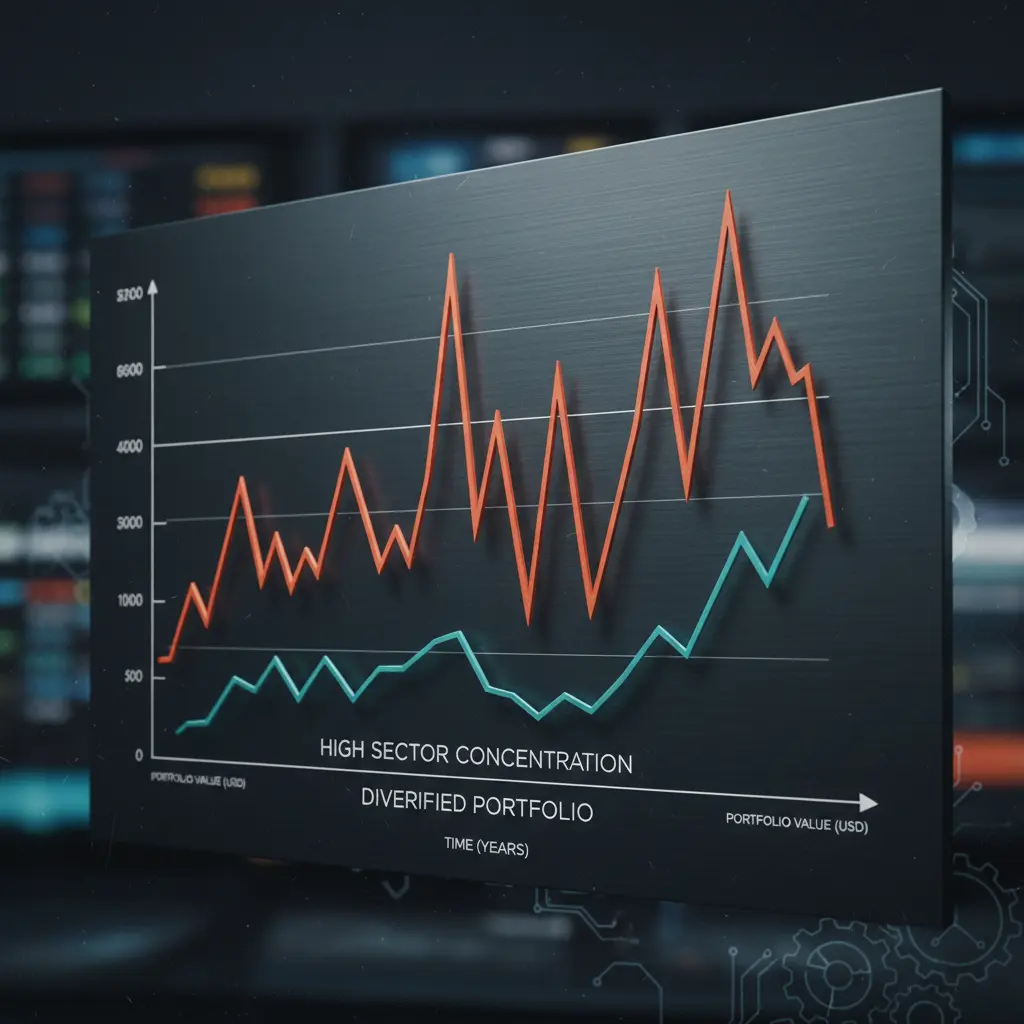
Identifying Concentration in Your Portfolio
The first step to managing sector concentration is identifying it. This involves a thorough review of your current holdings and categorizing them by sector. Many trading platforms and portfolio analysis tools offer sector breakdowns of your assets. If you're tracking manually, you'll need to assign each stock or ETF to its respective industry classification, such as the Global Industry Classification Standard (GICS).
Common sectors include Information Technology, Health Care, Financials, Consumer Discretionary, Consumer Staples, Industrials, Energy, Utilities, Real Estate, Materials, and Telecommunication Services. Once you have this breakdown, calculate the percentage of your total portfolio value allocated to each sector. A common guideline is to avoid having any single sector represent more than 25-30% of your total portfolio, though this can vary based on your risk tolerance and overall investment strategy.
If your analysis shows, for example, that 40% of your portfolio is in Financials and another 20% is in Real Estate (which is also sensitive to interest rates), you have significant exposure to interest rate sensitive sectors. This makes you vulnerable to hikes or cuts in central bank rates. A less obvious concentration might be across seemingly different companies that are all heavily reliant on a single commodity, like oil, for their operations or revenue streams.
Scenario 2: Overexposure to Energy
Situation: A trader holds a major oil producer, an oilfield services company, and an energy-focused ETF, making up 50% of their assets.
Recommended Option: Reduce holdings in one or two of these energy-related assets and diversify into healthcare or technology.
Alternative Option: Keep all positions, believing oil prices will continue to rise.
What To Avoid: Adding more energy stocks, assuming past performance guarantees future returns.
Explanation: While energy can be profitable, heavy concentration leaves the portfolio highly susceptible to oil price volatility and geopolitical events affecting supply.
Strategies for Diversification
Diversification is the primary tool for managing sector concentration risk. It involves spreading your investments across various sectors and industries to reduce the impact of any single sector's poor performance on your overall portfolio. The goal is not to eliminate all risk but to ensure that a negative event in one sector does not cripple your entire trading capital.
One effective method is using Exchange Traded Funds (ETFs) that track broad market indices or specific sectors. By holding a diversified ETF like the SPDR S&P 500 ETF Trust (SPY), you gain exposure to hundreds of companies across all major sectors. For more targeted diversification, you can use sector-specific ETFs (e.g., XLK for Technology, XLE for Energy) but ensure you don't over-concentrate in any single sector ETF either. Another approach is to manually select stocks from different sectors, ensuring a balance. This requires more research but offers greater control over individual holdings.
Consider adding alternative asset classes that are less correlated with traditional stock market sectors. These might include bonds, commodities (like gold or silver), or even real estate investment trusts (REITs) if managed carefully. The key is to find assets whose performance drivers are different from those of your existing concentrated sector.
Scenario 3: The Healthcare Dependency
Situation: A portfolio is heavily weighted towards pharmaceutical and biotech stocks due to perceived defensive qualities.
Recommended Option: Trim some biotech exposure and add exposure to cyclical sectors like consumer discretionary or industrials.
Alternative Option: Maintain the focus, betting on innovation in the sector.
What To Avoid: Ignoring potential regulatory risks or patent cliffs affecting specific drugs.
Explanation: Even defensive sectors have their own unique risks. Broadening the scope provides a buffer against sector-specific regulatory or scientific setbacks.
How to Rebalance Your Portfolio
Rebalancing is the process of adjusting your portfolio to bring it back to your target asset allocation. If your sector analysis reveals over-concentration, rebalancing is your action plan. It typically involves selling some of the overweighted assets and using the proceeds to buy underweight assets.
For example, if your technology holdings have grown to represent 50% of your portfolio due to strong performance, you would sell a portion of those tech stocks. The cash generated could then be used to increase positions in sectors that have lagged, such as utilities or consumer staples, bringing your sector weights closer to your desired distribution. This process helps to systematically lock in some gains from outperforming sectors and buy into underperforming ones, often at lower prices.
Rebalancing can be done on a set schedule (e.g., quarterly or annually) or when certain thresholds are breached (e.g., when a sector's weight deviates by more than 5-10% from its target). The frequency and triggers for rebalancing depend on market volatility and your personal trading strategy. Don't rebalance so frequently that trading costs eat into your profits, but don't wait so long that concentration risk becomes acute again.
Scenario 4: Rebalancing After a Bull Run
Situation: A trader's portfolio, initially balanced across sectors, now has 45% in tech after a significant tech sector rally.
Recommended Option: Sell 15-20% of the tech holdings and reallocate to underrepresented sectors like energy or financials.
Alternative Option: Let the tech position grow, but set a strict stop-loss.
What To Avoid: Panic selling or letting emotions dictate the rebalancing timing.
Explanation: Rebalancing systematically reduces risk by taking profits from winners and redeploying capital to areas that may offer future growth potential or act as diversifiers.
| Sector | Current Allocation (%) | Target Allocation (%) | Action |
| Technology | 45 | 25 | Sell |
| Financials | 15 | 20 | Buy |
| Healthcare | 15 | 20 | Buy |
| Energy | 10 | 15 | Buy |
| Utilities | 5 | 10 | Buy |
| Consumer Staples | 5 | 5 | Hold |
| Consumer Discretionary | 5 | 5 | Hold |
When is Sector Concentration Beneficial?
While diversification is generally the cornerstone of risk management, there are specific situations where strategic sector concentration can be advantageous. This usually occurs when a trader has a high conviction about a particular sector's future prospects, perhaps due to upcoming technological advancements, favorable regulatory changes, or strong macroeconomic tailwinds. In such cases, a tactical overweighting in a specific sector can potentially amplify returns.
For instance, a trader might anticipate a significant shift towards renewable energy and decide to concentrate a larger portion of their portfolio in clean energy companies, related infrastructure, and relevant materials. This is a calculated risk, assuming their research and forecasting are accurate. However, even in these high-conviction plays, it's crucial to maintain some level of diversification within the concentrated sector itself. Instead of betting on a single renewable energy company, a trader might invest in several, perhaps covering solar, wind, and battery storage technologies.
Another example could be a trader positioned for a rise in commodity prices. They might overweight sectors like Materials, Energy, or Agriculture. This requires diligent monitoring of supply and demand dynamics, geopolitical factors, and currency movements that influence commodity prices. The potential reward for correct sector timing can be substantial, but the risk of being wrong is equally significant.
Scenario 5: The AI Revolution Bet
Situation: A trader believes Artificial Intelligence will fundamentally transform multiple industries and decides to allocate 40% to various AI-related tech stocks.
Recommended Option: Diversify within tech by including AI software, hardware, and AI-adjacent industries like cybersecurity and advanced analytics.
Alternative Option: Concentrate heavily on a few AI chip manufacturers.
What To Avoid: Investing in companies with unproven AI capabilities or relying solely on hype.
Explanation: A conviction play requires careful execution. Diversifying within the theme itself can mitigate risks associated with any single company or sub-sector underperforming.
Risks of Ignoring Sector Concentration
Ignoring sector concentration risk can lead to significant, often unexpected, portfolio drawdowns. When a sector experiences a sharp decline, a concentrated portfolio will suffer disproportionately more than a diversified one. This can hinder long-term growth, deplete trading capital, and lead to emotional trading decisions, such as selling at the worst possible time out of panic.
Consider the dot-com bubble burst in the early 2000s. Investors heavily concentrated in technology stocks saw their portfolios decimated. Similarly, the 2008 financial crisis devastated portfolios with heavy exposure to financials and real estate. More recently, the COVID-19 pandemic severely impacted sectors like travel, hospitality, and airlines, while boosting others like e-commerce and healthcare. A lack of diversification meant that many traders who were heavily invested in the former faced severe losses.
Beyond market downturns, regulatory changes can also be a major catalyst for sector-specific problems. For example, new environmental regulations could severely impact fossil fuel companies, or changes in healthcare policy could affect pharmaceutical and insurance providers. Without diversification, your portfolio is essentially at the mercy of forces you may not control or even anticipate within your concentrated sectors.
Scenario 6: The Real Estate Downturn
Situation: A trader has a large allocation to real estate investment trusts (REITs) and homebuilder stocks, betting on a housing market boom.
Recommended Option: Reduce exposure to real estate and reallocate to sectors less sensitive to interest rates, like consumer staples or healthcare.
Alternative Option: Hold positions, assuming the housing market will recover.
What To Avoid: Levering up further on real estate assets when interest rates are rising.
Explanation: Real estate is highly sensitive to interest rates and economic cycles. Concentration here makes the portfolio vulnerable to policy shifts and economic slowdowns.
Understanding and actively managing sector concentration risk is not just about avoiding catastrophic losses; it's a fundamental component of building a resilient trading portfolio capable of navigating diverse market conditions. Utilize tools available on PipsAlerts to regularly review your sector allocations.
Explore more on managing your trading strategy in our Risk Management and Trading Journal guides.
Step-by-step trading workflow
Managing Sector Concentration Risk in Your Trading Portfolio works better when the process is explicit. Use a short ordered checklist before you act.
- Define the setup and the exact reason it is on your radar.
- Measure the downside first, including stop distance and position size.
- Check whether the reward and market context still justify the trade.
- Log the plan so execution can be reviewed after the outcome is known.
Start with the cluster hub. Read portfolio guides first if you want the broader workflow behind this topic.
Related reading: portfolio overlap analysis | diversification score explained | trading risk management