
Selecting the right Forex trading institute in Lahore requires careful scrutiny of its educational approach and practical application. Look beyond flashy promises and focus on demonstrable teaching quality, experienced instructors, and a curriculum that prioritizes risk management and real-world trading scenarios.
Beyond the Sales Pitch: What Core Curriculum Is Essential?
A genuine Forex trading institute won't just talk about profits; it will emphasize the foundational pillars of successful trading. A genuine Forex trading institute won't just talk about profits; it will emphasize the foundational pillars of successful trading. This means a robust curriculum covering technical analysis, fundamental analysis, and crucially, risk management strategies. Don't be swayed by institutions that gloss over risk. Ask specifically about modules on position sizing, stop-loss orders, and understanding leverage. For instance, a good program will dissect the risks associated with a 1:100 leverage, explaining how it amplifies both potential gains and devastating losses. They should also teach you how to calculate the monetary risk per trade as a percentage of your capital. Without this, you're essentially trading blind. An institute that offers a simplified, step-by-step approach to building a trading plan, integrating risk parameters from the start, provides tangible value. Conversely, if the syllabus reads like a marketing brochure with vague terms like 'advanced trading secrets,' be cautious.

Instructor Experience: Real Traders or Lecturers?
The credibility of any trading education hinges on the instructors. The credibility of any trading education hinges on the instructors. Are they seasoned traders with verifiable track records, or are they primarily educators who may have limited real-world, high-stakes experience? A reputable Forex trading institute will proudly showcase its instructors' backgrounds, ideally highlighting their active participation in the markets. Don't hesitate to ask about their personal trading experience, the markets they trade, and their primary strategies. For example, an instructor who primarily trades the EUR/USD with a discretionary approach might offer different insights than one who focuses on algorithmic trading of emerging market currencies. If an institute claims its instructors are profitable, ask for objective proof, not just anecdotes. A curriculum designed by individuals who have personally navigated market volatility and managed significant risk offers a depth of knowledge that cannot be replicated by theory alone. A good indicator is an instructor who can provide specific examples of past losing trades and how they managed the aftermath.
Risk Management: The Non-Negotiable Foundation
This cannot be stressed enough. This cannot be stressed enough. Any Forex trading institute in Lahore worth its salt will dedicate significant time to risk management. This isn't a supplementary module; it's the bedrock of sustainable trading. You should learn about the R:R ratio (Risk to Reward), understanding your maximum acceptable loss on any given trade, and implementing strict stop-loss protocols. A practical example would be learning to determine if a trade setup on the GBP/JPY with a potential 50-pip profit is worth the 25-pip risk, thus achieving a 2:1 R:R. An institute that focuses heavily on entry signals without emphasizing how to protect your capital is failing you. Consider an institution that teaches you to build a trading journal to track your risk metrics over time. This is a far more valuable skill than simply learning to identify chart patterns. When evaluating, ask directly: 'How much of your course is dedicated to capital preservation?' The answer should be substantial.
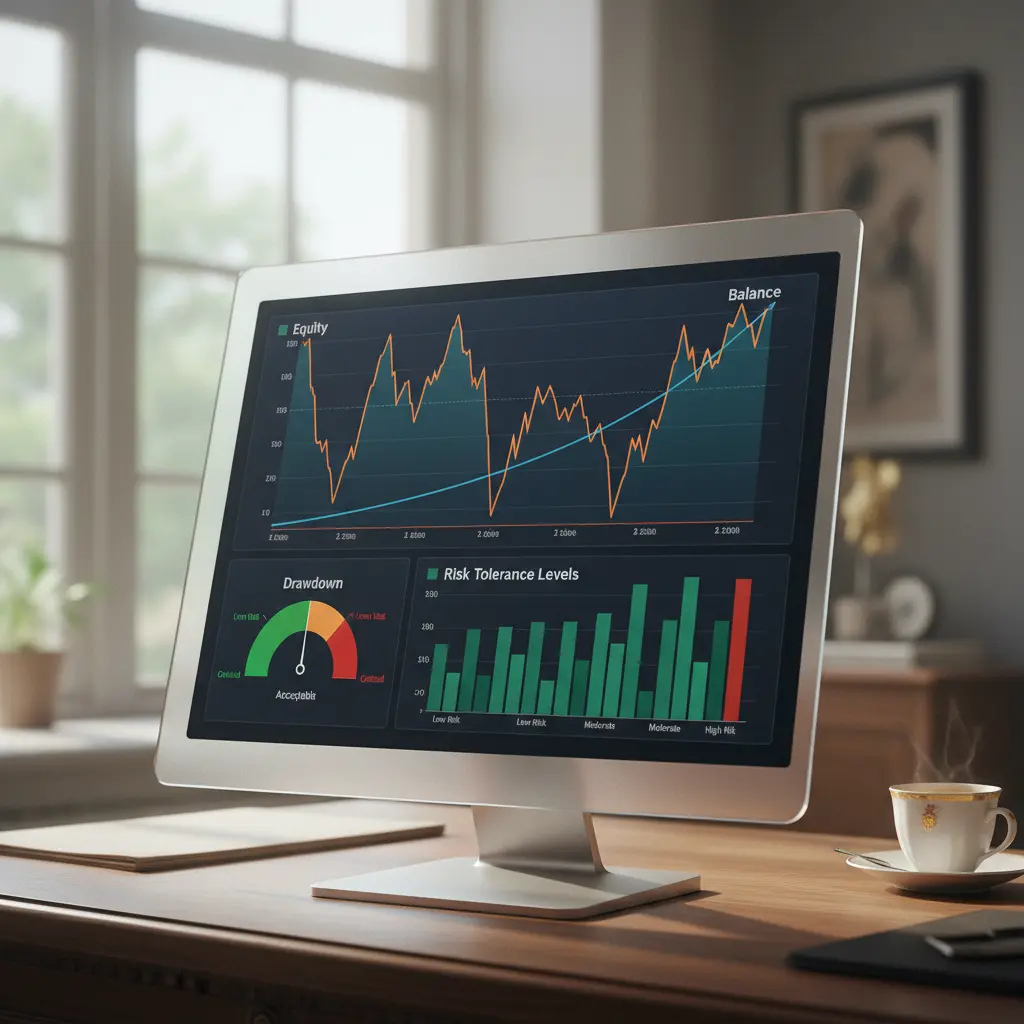
Trading Journal: A Tool for Improvement
A fundamental aspect of professional trading is self-analysis, and the primary tool for this is a trading journal. A fundamental aspect of professional trading is self-analysis, and the primary tool for this is a trading journal. A top-tier Forex trading institute will not only teach you the mechanics of trading but will also equip you with the skills to review your performance. This involves understanding how to record every trade - entry, exit, reasons for the trade, emotional state, and lessons learned. You should be taught how to analyze this journal to identify recurring mistakes, whether they are pattern-based errors, emotional biases, or deviations from your trading plan. For instance, discovering through your journal that you consistently lose money on high-impact news events highlights a critical area for improvement. Look for institutes that provide templates or software recommendations for effective journaling. This practical application of post-trade analysis is what separates aspiring traders from consistently performing ones. A course that integrates journal review into its structure demonstrates a commitment to your long-term development.
Scenario Example 1:
- Situation: A trader consistently enters trades impulsively before confirming a setup.
- Recommended Option: The institute teaches strict adherence to a trading plan and journal analysis to identify this pattern.
- Alternative Option: Focus solely on learning entry signals without reinforcing trade discipline.
- What to Avoid: Trading without a pre-defined plan or a system for reviewing trades.
- Explanation: Journaling reveals the impulsive nature, allowing corrective action.
Backtesting and Forward Testing: Validating Strategies
A responsible Forex trading institute will educate you on the importance of validating trading strategies. A responsible Forex trading institute will educate you on the importance of validating trading strategies. This involves two key phases: backtesting and forward testing. Backtesting is the process of applying a trading strategy to historical data to see how it would have performed. Forward testing, often done in a demo account, involves applying the strategy in real-time market conditions without risking real capital. A good institute will teach you not only how to perform these tests but also how to interpret the results objectively. For example, testing a swing trading strategy on EUR/USD historical data might reveal a win rate of 60% but a very low average profit per winning trade compared to the average loss. This insight is crucial. Beware of institutes that promote 'holy grail' strategies without demonstrating how to rigorously test and refine them. A curriculum that includes modules on statistical analysis of trading results offers significant value.
Demo vs. Live Trading: Bridging the Gap
The transition from a demo account to live trading is a critical juncture for any new trader. The transition from a demo account to live trading is a critical juncture for any new trader. A Forex trading institute should provide clear guidance on when and how to make this leap. This involves understanding psychological readiness, capital requirements, and the differences in execution and slippage between simulated and live environments. An instructor might explain that while a demo account offers risk-free practice, it doesn't replicate the emotional pressure of risking real money. They should offer practical advice on starting with small position sizes on a live account to manage this psychological hurdle. For instance, if you've consistently made 10% per month on a demo account, that doesn't automatically translate to live trading success. A good institute will help you set realistic expectations and manage the emotional aspects of live trading. Look for institutes that offer structured transition plans or mentorship post-demo trading.
Scenario Example 2:
- Situation: A trader has only traded on a demo account and has achieved consistent simulated profits.
- Recommended Option: The institute advises starting live trading with micro-lots and a well-defined risk limit per trade.
- Alternative Option: Immediately trading with significant capital based on demo performance.
- What to Avoid: Underestimating the psychological impact of live trading.
- Explanation: Starting small allows adaptation to real-money pressure while preserving capital.
Scenario Example 3:
- Situation: A trader experiences fear of missing out (FOMO) and chases trades.
- Recommended Option: The institute teaches trade journaling to identify FOMO as a pattern and develops a pre-trade checklist.
- Alternative Option: Focusing on advanced technical indicators without addressing emotional trading.
- What to Avoid: Entering trades without a clear reason or prior setup confirmation.
- Explanation: Journal analysis highlights FOMO, prompting a change in behavior via a checklist.
Community and Support: Learning Together
While individual trading is ultimately a solitary pursuit, the learning process can be significantly enhanced by a supportive community. While individual trading is ultimately a solitary pursuit, the learning process can be significantly enhanced by a supportive community. A Forex trading institute in Lahore that fosters a collaborative environment can be invaluable. This might include dedicated forums, live Q&A sessions with instructors, or peer-to-peer analysis groups. Such a community allows you to ask questions that might seem basic, share insights, and learn from the experiences of others. For example, discussing a particular chart pattern with fellow students and an instructor can reveal nuances you might have missed. A strong support network helps maintain motivation during inevitable losing streaks. Avoid institutions that operate solely on a one-way lecture model; interactive learning often leads to better retention and understanding. Access to experienced mentors who provide ongoing guidance is also a significant plus.
Evaluating Forex Trading Institutes in Lahore: A Checklist
To make an informed decision, consider the following factors when evaluating Forex trading institutes in Lahore: To make an informed decision, consider the following factors when evaluating Forex trading institutes in Lahore:
- Curriculum Depth: Does it cover technical analysis, fundamental analysis, and comprehensive risk management?
- Instructor Credentials: What is their real-world trading experience? Can they provide evidence?
- Risk Management Focus: Is capital preservation a central theme, not an afterthought?
- Practical Application: Does the course include exercises, case studies, and guidance on using trading journals?
- Testing Methodologies: Are backtesting and forward testing clearly explained and integrated?
- Demo-to-Live Transition: Is there practical advice for moving from simulation to real trading?
- Student Support: Is there an active community or mentorship available?
- Transparency: Are fees, course duration, and learning outcomes clearly stated without ambiguity?
Scenario Example 4:
- Situation: A trader struggles to define their trading edge or strategy.
- Recommended Option: The institute teaches a structured approach to strategy development and validation, including backtesting metrics.
- Alternative Option: Learning a variety of indicators without understanding how to combine them into a coherent, tested strategy.
- What to Avoid: Collecting many indicators without a tested framework for their use.
- Explanation: A structured development process leads to a defined, testable trading edge.
Scenario Example 5:
- Situation: A trader experiences significant emotional distress after a losing trade.
- Recommended Option: The institute provides psychological trading coaching and emphasizes the use of a trading journal to identify and manage emotional responses.
- Alternative Option: Assuming that increased profits will automatically solve emotional issues.
- What to Avoid: Ignoring the psychological aspect of trading or over-leveraging to 'recover' losses quickly.
- Explanation: Addressing emotions directly with tools like journaling leads to more stable trading behavior.
Scenario Example 6:
- Situation: A trader is unsure about how much capital to allocate to a specific trade.
- Recommended Option: The institute teaches specific position sizing techniques based on account size and risk tolerance, like the 1% or 2% rule.
- Alternative Option: Risking a fixed amount per trade regardless of account size or market conditions.
- What to Avoid: Risking a large percentage of capital on a single trade, especially without defined stop-losses.
- Explanation: Proper position sizing ensures that a few losing trades do not deplete the trading capital.
Comparing Forex Education Providers in Lahore
When comparing different Forex trading institutes in Lahore, it's helpful to create a comparison table. When comparing different Forex trading institutes in Lahore, it's helpful to create a comparison table. This allows for a clear, objective assessment of their offerings. Focus on the elements that directly contribute to your ability to trade responsibly and profitably. Pay close attention to how each provider addresses risk management and practical trading application, not just theoretical concepts.
| Feature | Institute A (Example) | Institute B (Example) | Institute C (Example) |
|---|---|---|---|
| Risk Management Curriculum | Extensive (5 modules) | Moderate (2 modules) | Basic (1 module) |
| Instructor Trading Experience | Verified active traders | Mixed, some former institutional traders | Primarily educators, limited public track record |
| Trading Journal Training | Mandatory component, software provided | Optional, templates provided | Not explicitly mentioned |
| Live Trading Support | Monthly mentorship sessions | Limited Q&A calls | None |
| Demo-to-Live Transition Guidance | Structured plan, psychological focus | General advice | None |
| Community Forum | Active, moderated | Limited user interaction | None |
| Cost | PKR 150,000 | PKR 90,000 | PKR 50,000 |
| Focus Area | Comprehensive, risk-first education | Technical analysis focused | Basic market concepts |
This table highlights how different institutes might prioritize various aspects of education. While Institute C is the cheapest, it clearly lacks depth in critical areas like risk management and ongoing support, which are paramount for a trader's survival and growth. Institute A, though more expensive, offers a far more robust and practical education that aligns with professional trading standards. Always consider the long-term value of education over the initial cost. For a deeper dive into how to manage your trading capital effectively, explore our guides on risk management.
Ultimately, choosing a Forex trading institute in Lahore is an investment in your financial future. Prioritize institutions that demonstrate a clear commitment to teaching you how to trade responsibly, manage risk diligently, and continuously learn. Remember, true education empowers you to make informed decisions, not just to follow signals.
Use the matching tool. The risk calculator helps turn this guide into a usable decision before the trade.
Related reading: trading risk management | risk reward ratio | how to use a trading journal | trading journal mistakes