Hidden concentration risk within Exchange Traded Funds (ETFs) is a significant threat to diversification. Understanding how individual holdings are weighted and how multiple ETFs can concentrate exposure to the same assets is crucial for prudent portfolio management. This guide will help you navigate this complexity.
What is ETF Overlap and Concentration Risk?
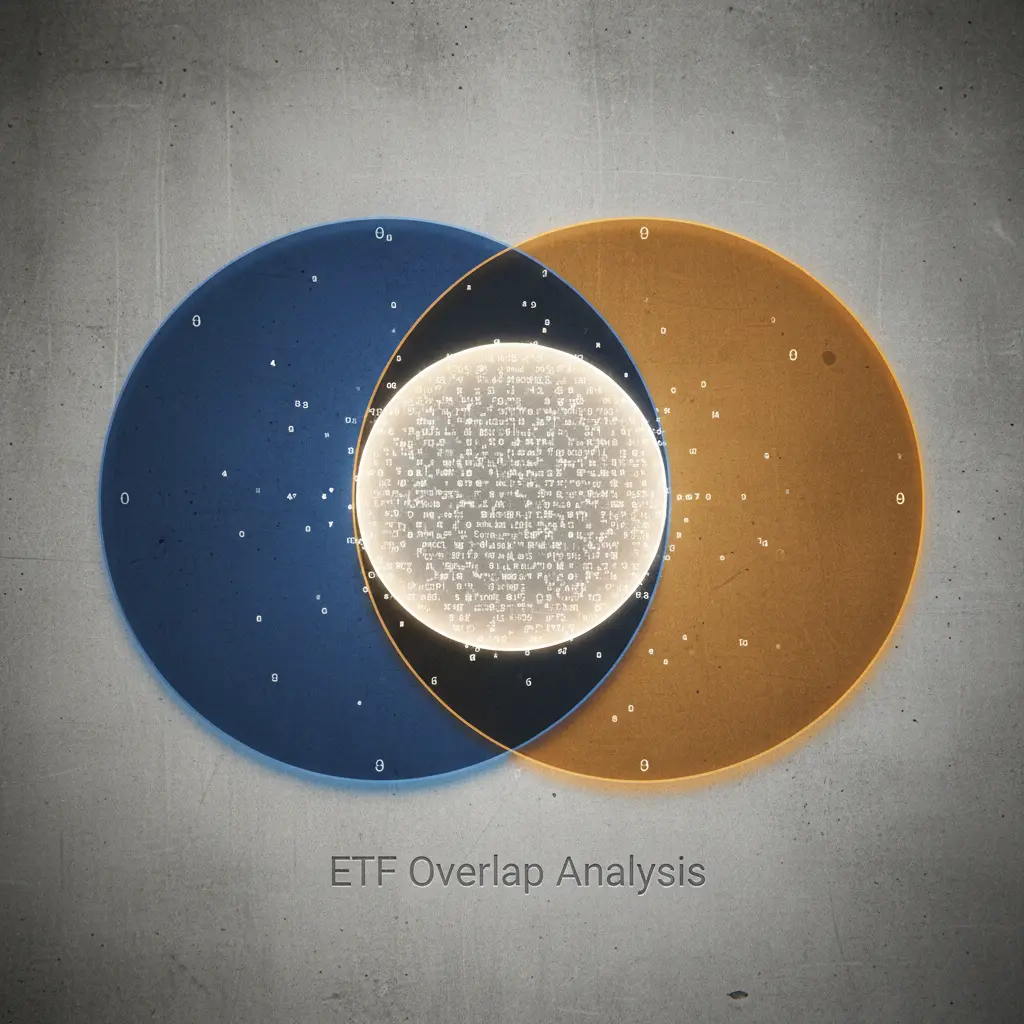
ETF overlap occurs when two or more ETFs in your portfolio hold the same underlying securities, often in disproportionately large amounts. This isn't always immediately obvious, especially with broad market or sector-specific ETFs. Concentration risk arises when this overlap leads to an unintended and excessive exposure to a particular company, sector, or asset class. If that single concentrated position experiences a downturn, it can significantly impact the overall value of your portfolio, undermining the intended diversification benefits.
Consider a scenario where you hold two tech-focused ETFs. Both might heavily invest in giants like Apple (AAPL), Microsoft (MSFT), and NVIDIA (NVDA). While they aim to offer broad tech exposure, the combined weight of these top holdings in your portfolio could be far higher than you realize. This means your portfolio's performance becomes heavily tied to the fortunes of these few tech behemoths, increasing risk.
The danger isn't limited to sector ETFs. Even broad market index ETFs, like those tracking the S&P 500, can exhibit concentration risk due to market capitalization weighting. The largest companies by market cap naturally receive the highest allocation. If you hold multiple S&P 500 ETFs, or an S&P 500 ETF alongside a large-cap growth ETF, you might find your portfolio disproportionately exposed to the top 10-20 largest companies.
Why Diversification Matters: The PipsAlerts Perspective
At PipsAlerts, we emphasize that true diversification is about reducing unsystematic risk - the risk tied to individual companies or specific events. Holding a collection of assets that move independently of each other is key. ETFs are popular tools for achieving this due to their low costs and ease of trading, but they are not foolproof. Unchecked overlap effectively turns a diversified portfolio into one that mimics concentrated stock picking without the same level of active oversight or potential reward.
Our approach centers on risk-aware decision-making. This means not just looking at the number of ETFs you hold, but critically examining what those ETFs actually hold. A portfolio with ten ETFs, each heavily invested in the same handful of mega-cap tech stocks, is not truly diversified. It's ten times more exposed to the risk of those specific stocks.
Scenario 1: The S&P 500 Duplication
- Situation: An investor holds SPY (SPDR S&P 500 ETF) and IVV (iShares Core S&P 500 ETF).
- Recommended Option: Consolidate into one S&P 500 ETF or choose ETFs with different underlying indices.
- Alternative Option: Keep both but significantly reduce allocation to other holdings to compensate for the concentrated exposure.
- What to Avoid: Believing that holding two S&P 500 ETFs provides true diversification.
- Explanation: Both ETFs track the S&P 500 index identically, meaning their holdings and weightings are virtually the same.
Understanding the underlying composition is paramount. We advocate for using tools that can help visualize and quantify this overlap, turning abstract risk into a tangible data point.
Tools and Techniques for Detecting Overlap
Identifying ETF overlap requires a proactive approach. Simply looking at an ETF's name or its stated index is insufficient. You need to delve into the specific holdings and their weightings. Several methods can help:
1. Holdings Data Analysis: Most ETF providers publish a list of their top holdings and their percentage allocation on their websites. Manually comparing these lists across your ETFs can reveal overlap, especially for the top 5-10 positions.
2. ETF Screener Tools: Advanced financial portals and brokerage platforms offer ETF screeners that often include features to compare ETFs side-by-side, highlighting common holdings. Some specialized tools can even calculate a portfolio-level overlap score.
3. Portfolio Analysis Software: Tools designed for portfolio analysis, like those we recommend for tracking your own performance, can often import your holdings and automatically flag overlapping securities across different funds. This significantly streamlines the process.
4. Sector and Industry Classification: Understanding how ETFs classify their holdings by sector (e.g., GICS) helps. If multiple ETFs have a high percentage allocation to the same sub-industry within Information Technology, for instance, it signals potential overlap.
Scenario 2: The Tech Sector Concentration
- Situation: An investor holds XLK (Technology Select Sector SPDR Fund) and QQQ (Invesco QQQ Trust).
- Recommended Option: Keep one and diversify into a different sector ETF or a broad market ETF with less tech concentration.
- Alternative Option: Understand the combined tech exposure and adjust overall portfolio risk tolerance accordingly.
- What to Avoid: Assuming XLK and QQQ offer distinct tech exposures without checking top holdings.
- Explanation: Both ETFs are heavily weighted towards large-cap tech stocks like Microsoft, Apple, and NVIDIA, leading to significant overlap.
Portfolio Impact: Quantifying the Risk
Once you've identified overlap, the next step is to quantify its impact on your portfolio. This involves calculating your effective exposure to specific assets or sectors. If an ETF holds Company X at 5% and another ETF holds Company X at 7%, and these ETFs represent 50% of your portfolio each, your net exposure to Company X is significantly higher than if you held just one of those ETFs.
Let's illustrate with a simplified example. Suppose you hold two ETFs:
- ETF A: 50% of your portfolio. Top holding is Company Z at 10% of ETF A.
- ETF B: 50% of your portfolio. Top holding is Company Z at 8% of ETF B.
Your total portfolio is $100,000.
- ETF A value: $50,000. Value of Company Z in ETF A: $5,000 (10% of $50,000).
- ETF B value: $50,000. Value of Company Z in ETF B: $4,000 (8% of $50,000).
Total value of Company Z in your portfolio: $5,000 + $4,000 = $9,000. This represents 9% of your total $100,000 portfolio. If Company Z's stock price drops by 20%, you lose $1,800 ($9,000 20%), impacting your overall portfolio by 1.8% ($1,800 / $100,000).
Without overlap, holding these ETFs might have resulted in a smaller, more manageable exposure. Tools like portfolio analyzers can automate this calculation, providing a clear picture of your concentrated risks. This is fundamental to our risk management philosophy.
Scenario 3: The Renewable Energy Double Dip
- Situation: An investor holds a broad clean energy ETF and a specialized solar ETF.
- Recommended Option: Assess the overlap in underlying solar companies and consider diversifying into other renewable sub-sectors or different geographical regions.
- Alternative Option: If the overlap is significant, reduce the allocation to one of the ETFs or hedge the concentrated exposure.
- What to Avoid: Assuming specialized ETFs inherently offer unique exposure without examining their top holdings.
- Explanation: Many clean energy ETFs include significant allocations to solar companies, leading to concentrated risk if held alongside a dedicated solar ETF.
| ETF Type | Common Overlap Risk | Key Overlapping Companies (Examples) | Diversification Strategy |
| Broad Market (e.g., S&P 500) | Concentration in Mega-Cap Stocks | Apple, Microsoft, NVIDIA, Amazon, Google | Combine with international ETFs or bond ETFs. |
| Sector Specific (e.g., Tech) | Overweighting Top 5-10 Companies | Microsoft, Apple, NVIDIA, Alphabet, Meta | Mix with different sectors or value/growth tilted ETFs. |
| Factor Based (e.g., Value/Growth) | Holding Same Large Companies in Different Factors | Companies appearing in both Value and Growth ETFs (e.g., large tech on cusp of reclassification) | Use broad market ETFs for core, factor ETFs for tilts with caution. |
| International Developed | Concentration in Japanese & European Giants | Toyota, Nestle, LVMH, ASML | Add emerging markets ETFs or ETFs focused on specific regions. |
| Emerging Markets | Concentration in China, Taiwan, South Korea | Tencent, Alibaba, TSMC, Samsung | Diversify with frontier markets or ETFs focused on specific countries/regions. |
| Commodity Focused (e.g., Gold) | Underlying physical holdings or futures contracts tied to the commodity price | N/A (price driven) | Use as a tactical asset, not a core holding for diversification. |
| Bond Market (e.g., Aggregate Bond) | Concentration in US Treasury or Corporate Debt | US Treasury Bonds, large US Corporate Bonds | Mix with international bonds, high-yield bonds, or inflation-protected securities. |
| Thematic (e.g., Cybersecurity) | Overlap with broader Technology ETFs | Companies within the cybersecurity niche that are also major tech players | Use as a small tactical allocation, understanding the tech linkage. |
Navigating Different ETF Categories
The potential for overlap varies significantly across different types of ETFs. Understanding these nuances helps in building a truly robust portfolio. Our guides on risk management often highlight how understanding asset composition is step one.
Broad Market ETFs: While designed for diversification, market-cap-weighted indices like the S&P 500 or MSCI World can become concentrated in the largest companies. Holding multiple broad market ETFs tracking similar global or domestic indices increases this effect.
Sector ETFs: These are prime candidates for overlap. A technology sector ETF and a communication services sector ETF might both hold Google (Alphabet) and Meta Platforms heavily, as these companies span both categories. Similarly, energy sector ETFs can concentrate on a few major oil producers.
Thematic ETFs: Thematic ETFs, focusing on trends like AI, cybersecurity, or clean energy, are particularly prone to overlap with broad tech or sector funds. A cybersecurity ETF, for example, might invest in companies that are also core holdings of a technology sector ETF.
Factor ETFs: ETFs designed to track specific investment factors (e.g., value, growth, momentum, low volatility) can also exhibit overlap. A large-cap growth ETF and a momentum ETF might both favor the same high-growth technology stocks.
Scenario 4: The Small-Cap Conundrum
- Situation: An investor holds two different small-cap blend ETFs.
- Recommended Option: Compare the top holdings and consider keeping one and adding an ETF from a different market capitalization range or a different investment style.
- Alternative Option: If top holdings are distinct, maintain both but ensure the overall portfolio allocation to small-caps is appropriate.
- What to Avoid: Assuming small-cap ETFs are automatically uncorrelated.
- Explanation: Even within small-cap indices, certain popular stocks or sub-sectors can dominate the top holdings, leading to unexpected overlap.
Scenario 5: International Exposure Pitfall
- Situation: An investor holds an EAFE (Europe, Australasia, Far East) index ETF and a Global ex-US ETF.
- Recommended Option: Check the weighting of key countries like Japan and dominant companies within them, and adjust for desired regional exposure.
- Alternative Option: Maintain both but be aware of the significant overlap in developed markets, potentially reducing allocation to one.
- What to Avoid: Assuming Global ex-US is entirely different from EAFE.
- Explanation: EAFE is a major component of most Global ex-US indices, leading to substantial overlap in developed market holdings.
Building a Resilient Portfolio: Strategies and Best Practices
Preventing hidden concentration risk requires a strategic approach to ETF selection and portfolio construction. It's about more than just picking funds; it's about understanding how they fit together.
1. Know Your Holdings: This is the golden rule. Before investing in an ETF, review its top holdings and sector allocations. Use tools like our portfolio analyzer to get a clear picture of your current exposure.
2. Diversify Across Indices, Not Just Providers: Holding SPY and IVV is redundant. Instead, consider holding an S&P 500 ETF alongside an international developed markets ETF, an emerging markets ETF, or a U.S. aggregate bond ETF. This provides genuine diversification across geographies and asset classes.
3. Understand Correlation: Not all overlaps are equal. High correlation between two assets means they tend to move together. When selecting ETFs, look for those with lower correlation to your existing holdings to maximize diversification benefits. Resources on trading journals can help track perceived correlations.
4. Use ETFs as Building Blocks: Think of ETFs as components of your overall strategy. A core holding might be a broad U.S. stock market ETF. Satellite holdings could be sector-specific or international ETFs, but ensure they don't create unintended concentration when combined with your core holding.
5. Rebalance Regularly: Over time, asset allocations can drift due to market movements. Rebalancing helps bring your portfolio back to its target allocation, which can implicitly reduce concentration risk that has built up on winning positions.
Scenario 6: The Global Equity Overlap
- Situation: An investor holds a US Total Stock Market ETF and a World ex-US ETF, but both are heavily weighted in US mega-cap tech stocks due to their global market dominance.
- Alternative Option: Review the specific tech holdings in the World ex-US ETF and consider substituting it with ETFs focused on specific regions (e.g., Europe, Asia) or markets (developed ex-US, emerging markets) to reduce tech concentration.
- Recommended Option: Ensure the overall portfolio allocation to technology is reviewed and potentially reduced if it exceeds the desired risk tolerance.
- What to Avoid: Assuming a World ex-US ETF will automatically diversify away from US tech giants.
- Explanation: US mega-cap tech companies often have significant global revenue and market presence, leading them to be large components of many international indices.
By applying these principles, you can move beyond simply collecting ETFs and instead construct a portfolio that genuinely reflects your diversification goals and risk tolerance.
If you're looking to deepen your understanding, our comprehensive guide hub offers extensive resources on various aspects of trading and investing.
Step-by-step trading workflow
Spotting ETF Overlap: How to Avoid Hidden Concentration Risk works better when the process is explicit. Use a short ordered checklist before you act.
- Define the setup and the exact reason it is on your radar.
- Measure the downside first, including stop distance and position size.
- Check whether the reward and market context still justify the trade.
- Log the plan so execution can be reviewed after the outcome is known.
Related reading: portfolio overlap analysis | diversification score explained | trading risk management