

Not all market news moves the needle. Separating vital information from distracting chatter is crucial for consistent trading success. Understanding the difference allows traders to focus their efforts, manage risk effectively, and avoid costly emotional reactions to fleeting headlines.
Why Most Market News Is Just Noise
The financial media ecosystem thrives on constant content. This often leads to an overwhelming volume of information, much of which lacks true market-moving potential. Think about the sheer number of daily reports, analyst opinions, and speculative articles published. Many are designed to capture attention rather than provide actionable insights. For example, a minor change in a regional manufacturing index might be amplified by a news outlet, but its impact on major currency pairs or indices could be negligible. Similarly, a pundit making a bold prediction without concrete data backing it up is often just adding to the noise. The challenge for traders isn't a lack of information, but an abundance of irrelevant data that can cloud judgment.
Identifying High-Impact News Events
To cut through the clutter, focus on categories of news that have historically demonstrated a significant impact on financial markets. These are typically announcements related to central bank policy, major economic indicators, geopolitical developments, and corporate earnings from bellwether companies. For instance, a surprise interest rate hike by the Federal Reserve or the European Central Bank will almost certainly cause immediate and significant market volatility. The monthly Non-Farm Payrolls report in the US, while often anticipated, can still trigger sharp price movements if the actual numbers deviate substantially from forecasts. Geopolitical events, like trade disputes or significant elections, can create widespread uncertainty, affecting global risk sentiment and leading to broad market reactions. When evaluating news, ask yourself: Who is releasing this information, what is the potential scope of its impact, and has the market already priced this in?
The Role of Economic Calendars
An economic calendar is your best ally in filtering news. It provides a structured overview of upcoming economic data releases, central bank speeches, and other significant events. Most calendars allow you to filter by country, importance level (often indicated by color-coding or number of flags), and even by specific indicators. This tool helps you prioritize which events warrant your attention and prepare for potential volatility. For example, if you're trading EUR/USD, you'll want to pay close attention to German CPI data, ECB press conferences, and US Federal Reserve announcements. Ignoring a high-impact event listed on the economic calendar is a common mistake. Conversely, spending too much time dissecting a low-impact report from a small economy is a waste of valuable analytical time.

Central Bank Speak: Decoding Intent
Central bank communications, including speeches from governors and policy meeting minutes, are a critical source of market-moving information. However, they are often deliberately ambiguous. The goal is to gauge forward guidance, understand the central bank's outlook on inflation and economic growth, and anticipate future policy moves. For example, a statement from the Bank of England governor might be parsed for hints about future interest rate decisions. If the language shifts from cautiously optimistic to more hawkish (suggesting rate hikes), this can significantly influence GBP. Conversely, dovish language (suggesting rate cuts or holds) can weaken the currency. Traders must learn to read between the lines, understanding that a single word or phrase can alter market expectations. Focus on statements that provide clear indications of future policy direction, rather than routine economic commentary.
Corporate Earnings: Beyond the Headline Numbers
While headline earnings per share (EPS) and revenue figures from major companies like Apple or Microsoft are important, the real market movers are often found in the accompanying guidance and management commentary. A company might beat EPS estimates but provide weak future revenue guidance, leading to a stock price decline. Conversely, a slight miss on earnings with strong forward-looking statements can boost the stock. For instance, if Amazon reports slightly lower-than-expected quarterly profits but signals aggressive expansion plans into a new market, this forward guidance could outweigh the earnings miss and drive the stock higher. Understanding the company's strategic direction, competitive landscape, and management's outlook is key to interpreting earnings reports effectively, rather than just reacting to the headline numbers.
Geopolitical Events and Black Swans
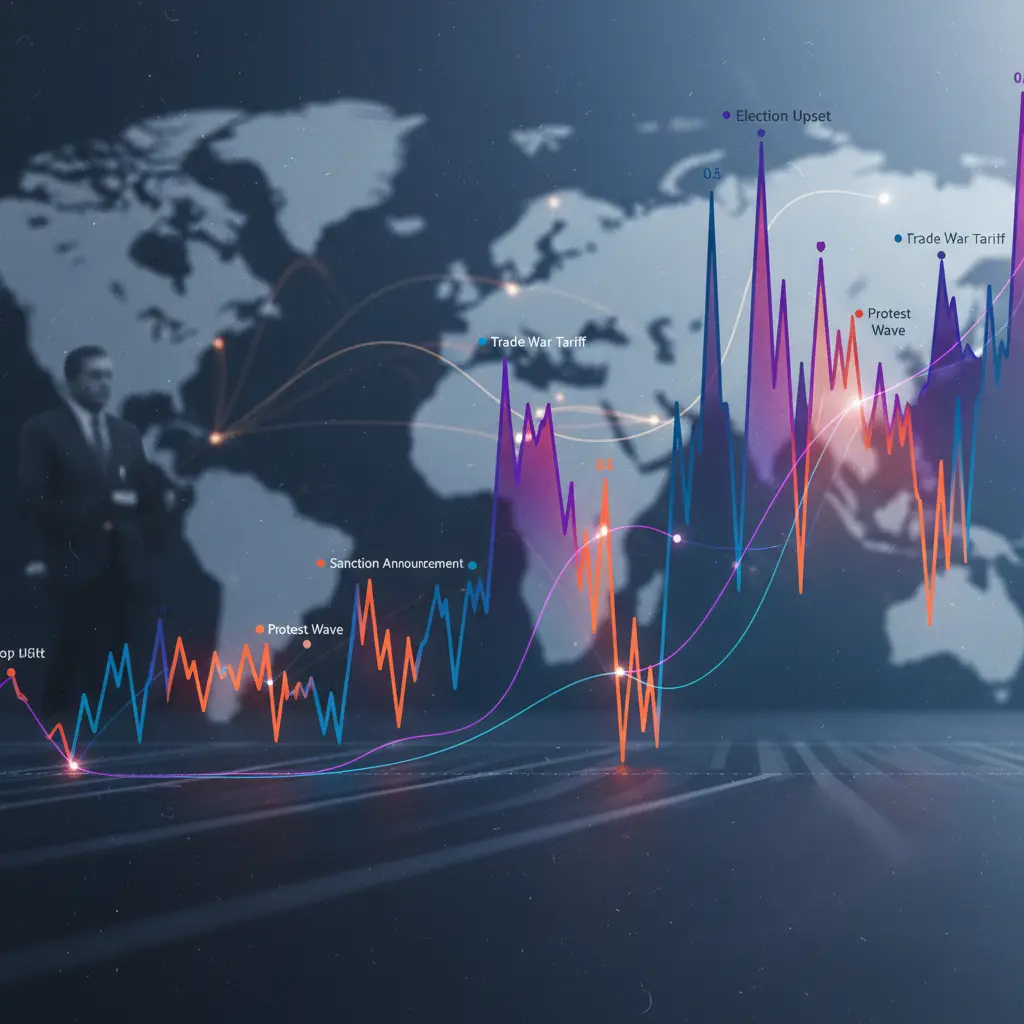
Unforeseen geopolitical events, often termed 'black swans', can inject extreme volatility into markets. These are low-probability, high-impact events that are difficult to predict. Examples include sudden conflicts, unexpected terrorist attacks, or major diplomatic breakdowns. While impossible to anticipate precisely, traders can mitigate risks associated with these events by maintaining robust risk management practices, such as using appropriate stop-loss orders and avoiding excessive leverage. For instance, the initial shock of the invasion of Ukraine led to sharp sell-offs in global equities and commodity markets, particularly energy and grains. A trader who was heavily exposed to these markets without adequate downside protection would have suffered significant losses. Building resilience into your trading plan is the best defense against such unpredictable news.
Developing Your News Filtering Strategy
Creating a personalized news filtering strategy is essential. This involves defining what constitutes 'important' news for your specific trading style and the markets you follow. Consider the following steps:
- Identify Key Markets: Which currencies, commodities, indices, or stocks do you primarily trade?
- Map Relevant News Sources: Determine the most reliable sources for news related to your markets. Focus on official releases (central banks, government statistical agencies) and reputable financial news providers.
- Utilize Economic Calendars: Integrate an economic calendar into your daily routine to track upcoming high-impact events.
- Set Alert Systems: Configure alerts for specific economic data releases or central bank announcements that directly affect your trading positions.
- Define Impact Thresholds: Decide what deviation from forecasts for key indicators will trigger a meaningful reaction in your chosen markets.
- Review and Adapt: Periodically review your strategy. Did certain types of news consistently impact your trades? Were there events you missed that proved significant? Adjust your focus accordingly.
Scenario Analysis: Putting Theory into Practice
Let's look at a few scenarios: Let's look at a few scenarios:
Scenario 1: US Inflation Data Release
Situation: Upcoming release of US CPI data. Forecasts are for a slight increase.
Recommended Option: Monitor the actual CPI figure and its deviation from the forecast. Be prepared for potential USD volatility.
Alternative Option: Ignore the release if it's not a direct component of your current trade setup.
What To Avoid: Making large, unhedged positions just before the release based on speculation.
Explanation: CPI is a primary inflation gauge, directly influencing Fed policy expectations and thus USD.
Scenario 2: RBA Interest Rate Decision
Situation: Reserve Bank of Australia announces its interest rate decision. The market widely expects a rate hold.
Recommended Option: Pay close attention to the accompanying statement for any hints about future policy direction. A hawkish or dovish tone can move the AUD even without a rate change.
Alternative Option: Focus only on whether the rate changed or not.
What To Avoid: Ignoring the RBA statement, assuming a rate hold means no market impact.
Explanation: Central bank forward guidance is often more impactful than the immediate rate decision itself.
Scenario 3: Tech Company Earnings Report
Situation: A major semiconductor company releases its quarterly earnings. EPS beat estimates, but revenue guidance for the next quarter is weak.
Recommended Option: Analyze the stock's reaction based on the guidance, not just the headline earnings beat. Consider the implications for related tech stocks.
Alternative Option: Assume the stock will rally due to the EPS beat and buy without reading the full report.
What To Avoid: Overreacting to the headline numbers without considering management's outlook.
Explanation: Future expectations often drive stock prices more than past performance.
Scenario 4: Emerging Market Political Instability
Situation: News emerges of escalating political tensions in a significant emerging market country, impacting its currency.
Recommended Option: Assess exposure to that currency and related assets. Consider tightening risk management or reducing positions if heavily exposed.
Alternative Option: Continue trading unrelated assets as if no major global event is occurring.
What To Avoid: Dismissing the event as isolated and not understanding its potential contagion effect on global risk sentiment.
Explanation: Geopolitical events can have ripple effects across financial markets, even if seemingly distant.
Scenario 5: Analyst Upgrade/Downgrade
Situation: A prominent analyst upgrades a widely held stock, but the company's fundamentals haven't changed significantly.
Recommended Option: Treat the upgrade as sentiment-driven news. Look for confirmation from technical indicators or fundamental shifts before acting.
Alternative Option: Immediately buy the stock solely based on the analyst's recommendation.
What To Avoid: Relying exclusively on analyst opinions without independent verification.
Explanation: Analyst ratings can influence short-term price action but may not reflect long-term value.
Scenario 6: Minor Company-Specific News
Situation: A small, non-influential company announces a minor product update.
Recommended Option: Ignore the news unless you are specifically invested in that small company and it directly impacts your thesis.
Alternative Option: Spend significant time researching this minor news item.
What To Avoid: Allowing minor, company-specific news from a non-major player to distract from broader market trends.
Explanation: Most news from smaller entities has limited impact on overall market direction.
The Cost of Information Overload
The constant influx of news can lead to several negative outcomes for traders. One is analysis paralysis, where the sheer volume of data makes it impossible to form a clear trading plan. Another is emotional trading; reacting impulsively to sensational headlines without a rational basis can lead to significant losses. For example, a trader might see a scary headline about a potential recession and panic-sell their entire portfolio, only for the market to rebound days later. Furthermore, spending excessive time sifting through noise detracts from more productive activities like backtesting strategies, refining risk management rules, or analyzing charts for technical setups. Prioritizing your information intake is not just about efficiency; it's about protecting your capital and mental capital.
Table: News Impact vs. Source Reliability
| Type of News/Event | Typical Impact Level | Source Reliability | Actionable Insight |
|---|---|---|---|
| Central Bank Policy Announcements (e.g., Fed rate hikes) | Very High | Very High | Direct impact on interest rates, currency values, risk appetite. |
| Major Economic Indicators (e.g., US Non-Farm Payrolls) | High | High | Influences monetary policy expectations, economic growth outlook. |
| Geopolitical Crises (e.g., sudden conflict) | Very High (often sudden) | Medium (initial reports can be chaotic) | Impacts risk sentiment, commodity prices, currency flows. |
| Corporate Earnings (Major Indices) | Medium to High (company-specific) | High | Affects individual stocks, sector performance, and broad market sentiment. |
| Secondary Economic Data (e.g., housing starts, retail sales) | Medium | High | Provides ongoing economic health signals, can fine-tune policy expectations. |
| Analyst Ratings/Price Targets | Low to Medium (short-term) | Medium | Can cause short-term price swings; less reliable for long-term strategy. |
| Speculative Blog Posts/Social Media Buzz | Very Low (unless it becomes a narrative) | Very Low | Generally noise; requires extreme caution and independent verification. |
| Routine Company Updates (non-earnings) | Very Low (unless strategic) | High | Usually only impacts the specific company's stock. |
By understanding the relative impact and reliability of different news sources, traders can build a more efficient and effective approach to market information. Focusing on high-impact events from credible sources helps in making informed, risk-aware decisions.
To further refine your approach to market data, explore our guides on effective risk management and how a comprehensive trading journal can help you track the impact of news on your trades.
Start with the cluster hub. Read market news guides first if you want the broader workflow behind this topic.
Use the matching tool. The market news explainer helps turn this guide into a usable decision before the trade.
Related reading: how to read market news | oil news market impact | fed meeting news explained