
Forex signals can offer insights, but their effectiveness hinges entirely on your ability to verify their source, understand their logic, and integrate them responsibly into your trading plan. Relying on them blindly without critical analysis is a fast track to losses. Success comes from using them as one piece of a larger, well-defined strategy, not as a complete trading solution.
What Are Forex Signals and How Do They Function?
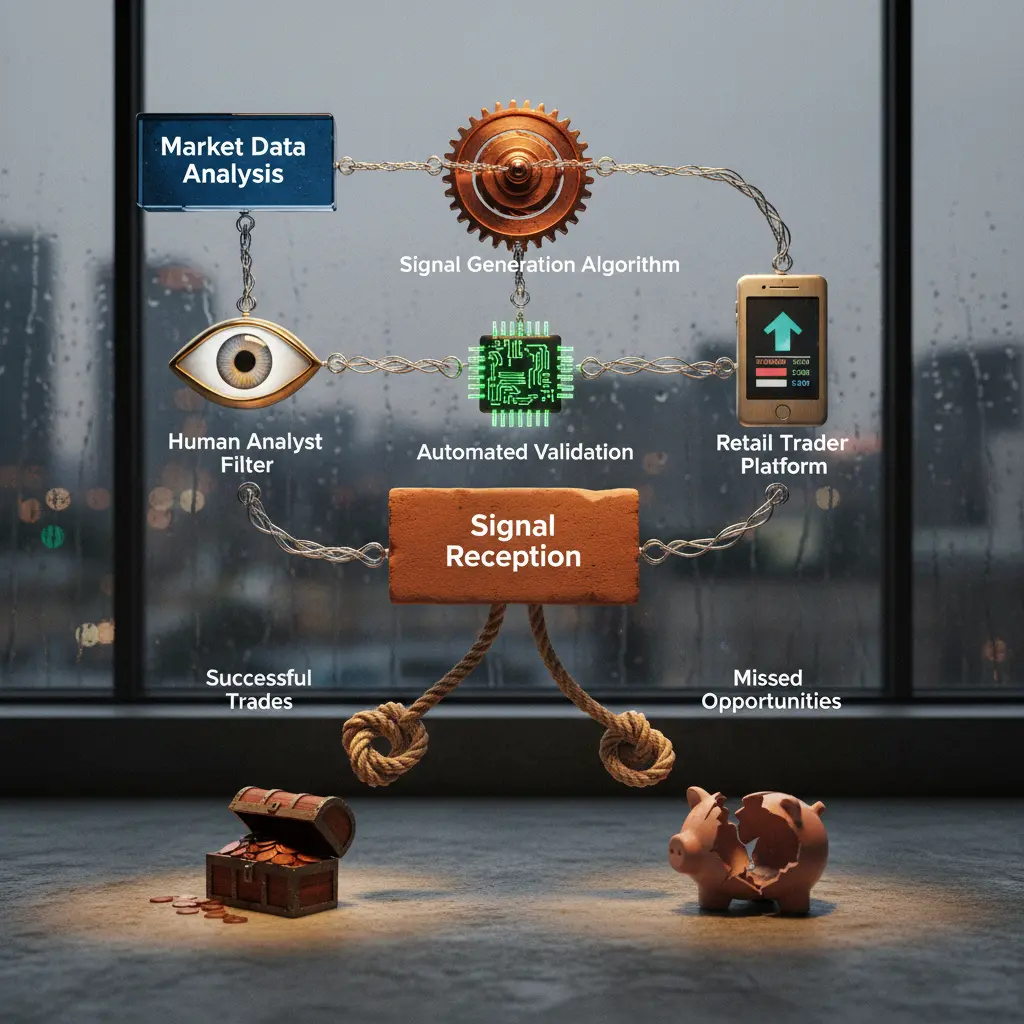
Forex signals are essentially trade recommendations provided by a third party. These recommendations typically suggest a specific currency pair to trade, whether to buy or sell, a precise entry price, and often a take-profit target and a stop-loss level. They are generated through various means, ranging from automated algorithms analyzing market data to fundamental analysis by experienced traders, or even a combination of both. Some providers offer signals via SMS, email, or dedicated platforms. The core idea is to simplify trading decisions by providing ready-made opportunities. For instance, a signal might read: 'Buy EUR/USD at 1.1250, Target 1.1300, Stop Loss 1.1220.' A trader receiving this would then execute the trade based on this information. The challenge lies in the black-box nature of many signal services; you often don't know precisely why the signal was generated.
The Allure and The Pitfalls of Forex Signals
The primary appeal of forex signals is the promise of saving time and effort. For beginners or those with limited market analysis skills, signals can seem like a shortcut to profitable trading. They offer the potential to tap into market opportunities without needing to spend hours studying charts or economic calendars. Many services also claim high win rates, which is a powerful marketing tool. However, this allure frequently masks significant pitfalls. The biggest is the lack of transparency. If you don't understand the methodology behind a signal, you can't adapt it when market conditions change. Furthermore, many signal providers are unregulated entities, making it difficult to verify their past performance or hold them accountable. A common scenario is a trader blindly following a string of successful signals, only to suffer a catastrophic loss when a few bad signals hit, having never learned to manage risk independently.
When Do Forex Signals Actually Deliver Value?
Signals can add value under specific conditions, primarily when they serve as a confirmation or idea generator rather than a directive. This happens when a trader already has a robust trading strategy and uses signals to: 1. Validate existing trade ideas. If your analysis suggests a potential buy on GBP/USD, and a reputable signal service independently flags a buy for the same pair with a similar target, it can increase your confidence. 2. Expose new opportunities. A signal might highlight a market setup you might have otherwise missed due to focusing on other pairs or timeframes. 3. Learn analytical approaches. Some advanced signal services offer commentary or explanations behind their signals, which can be educational. For example, a signal provider using a specific combination of Moving Average Convergence Divergence (MACD) and the Relative Strength Index (RSI) might explain this logic. A trader can then study these indicators to understand the underlying setup. The key is active engagement, not passive reception. You should always be asking 'why' and cross-referencing with your own knowledge.
Key Factors for Evaluating a Forex Signal Provider
Choosing a reliable signal provider is crucial. Here are the essential elements to scrutinize:
- Transparency and Methodology: Do they clearly explain how signals are generated? Vague answers like 'proprietary algorithms' are red flags. Look for providers who discuss the indicators, strategies, or fundamental factors they employ.
- Verified Track Record: Demand independently verified historical performance data, not just screenshots or self-reported results. Reputable services often use third-party platforms like Myfxbook to display audited trading history.
- Risk Management Guidance: Do their signals include sensible stop-loss and take-profit levels? Are these levels aligned with sound risk management principles (e.g., stop-loss not exceeding 1-2% of account equity per trade)?
- Customer Support and Education: Is the provider accessible for questions? Do they offer educational resources that help you understand trading concepts, rather than just pushing signals?
- Pricing Structure: Is the cost reasonable and justified by the value provided? Beware of extremely low prices coupled with unrealistic profit promises.
Consider the case of a signal provider that only shows winning trades. While tempting, this is a common marketing tactic. A real, verifiable track record will include both wins and losses, demonstrating a consistent, albeit not perfect, performance.
Integrating Signals into Your Trading Workflow
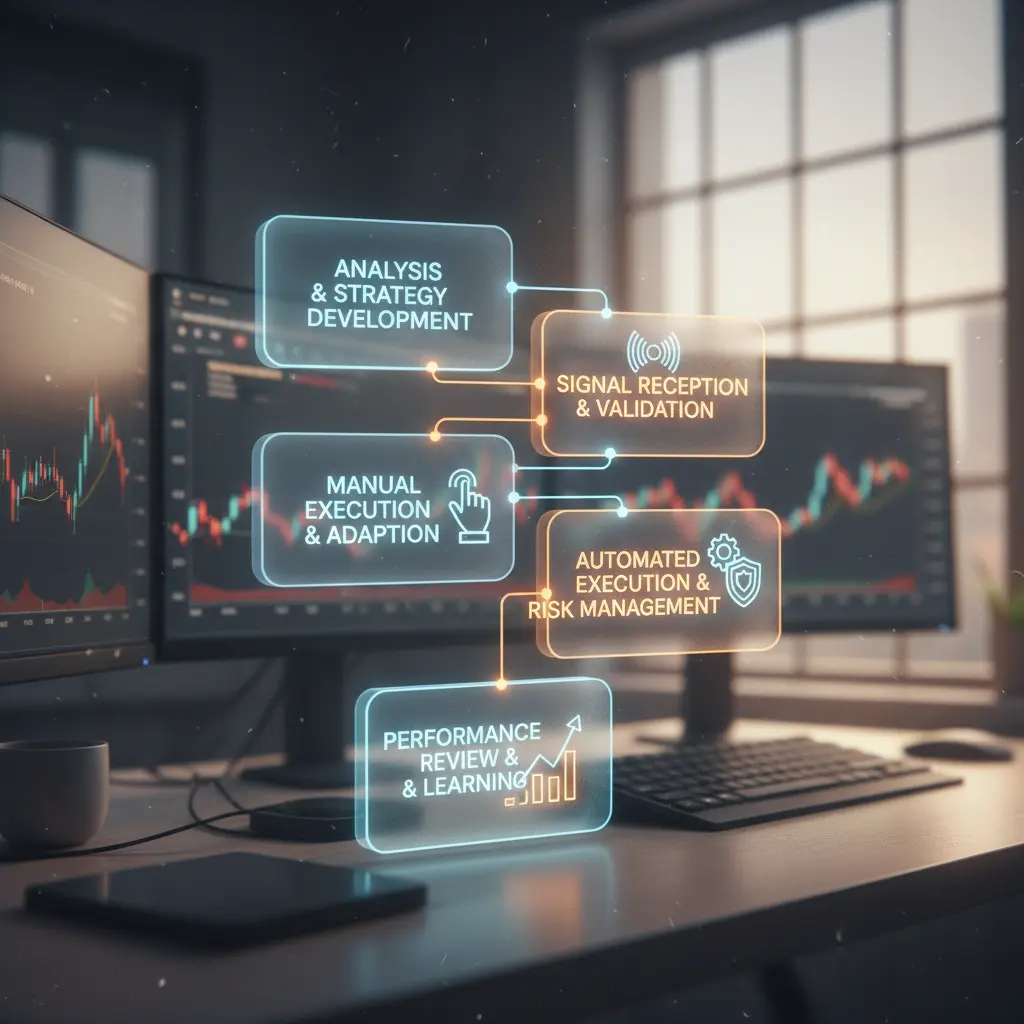
Using forex signals effectively requires integration, not blind adoption. Here's a practical approach:
Scenario 1: Confirmation
- Situation: You've identified a potential bullish setup on USD/JPY based on a support level and an RSI divergence.
- Recommended Option: You receive a buy signal for USD/JPY from a provider whose methodology you trust (e.g., they use price action and volume analysis).
- Alternative Option: You receive a buy signal, but their methodology is unclear or contradicts your analysis.
- What to Avoid: Placing the trade solely because of the signal without confirming it with your own analysis or understanding its basis.
- Explanation: The signal acts as a secondary confirmation, increasing your conviction in a trade you've already vetted.
Scenario 2: Idea Generation
- Situation: You're monitoring major currency pairs but haven't found a high-probability setup today.
- Recommended Option: A signal service alerts you to a potential short opportunity on AUD/NZD based on a complex technical indicator combination you haven't explored recently.
- Alternative Option: The signal is for a pair or setup you are completely unfamiliar with and requires significant learning to even understand.
- What to Avoid: Trading the signal without first researching the currency pair and the underlying trading conditions it's based on.
- Explanation: The signal introduces a new trading idea that you can then investigate further using your own analytical skills.
Scenario 3: Over-reliance
- Situation: You've had a few winning trades following signals without much personal analysis.
- Recommended Option: Take a step back and review your trading journal to understand why those trades were successful and what your role was.
- Alternative Option: Continue to blindly follow signals, expecting similar results.
- What to Avoid: Believing the signals are a foolproof system that requires no effort or critical thought from your end.
- Explanation: This is a dangerous mindset that leads to significant losses when market conditions shift or the signal provider's performance degrades. Building your own analytical skills is paramount.
The Importance of a Trading Journal
Regardless of whether you use signals or not, a trading journal is indispensable. Regardless of whether you use signals or not, a trading journal is indispensable. When incorporating signals, your journal should specifically track:
- The source of the signal (if applicable).
- Your independent analysis of the trade setup.
- Whether the signal confirmed or contradicted your analysis.
- The outcome of the trade.
- Your emotional state during the trade.
- Lessons learned from the trade.
This detailed record helps you discern whether profits are due to your own skills, the signal's quality, or sheer luck. It's the only way to objectively assess the true effectiveness of any signal service in your personal trading context. Without this, you're trading in the dark, unable to replicate success or learn from mistakes.
Table: Evaluating Signal Services vs. DIY Analysis
This table contrasts the potential benefits and drawbacks of relying on signals versus developing your own analytical skills.
| Feature | Forex Signals (Potentially) | DIY Analysis (Consistent Effort) | What to Avoid |
| Time Savings | High | Low (initially) | Ignoring signals completely if you have the time to analyze. |
| Learning Curve | Low | High | Believing signals eliminate the need to learn trading. |
| Control Over Trades | Low | High | Giving up all decision-making power to a signal provider. |
| Risk Management | Depends on provider; often poor | Entirely your responsibility, can be excellent | Using signals without setting your own stop-losses. |
| Adaptability | Low (fixed strategy) | High (can adapt to market changes) | Sticking rigidly to one analysis method without adjustment. |
| Cost | Subscription fees | Time investment; educational materials | Paying exorbitant fees for unverified signal performance. |
| Profit Potential | Variable, often overstated | Potentially unlimited with skill development | Expecting consistent results from any source. |
| Accountability | Low (provider may vanish) | High (you are responsible) | Blaming signals for losses without self-reflection. |
Is It Worth Paying for Forex Signals?
The decision to pay for forex signals is highly personal and depends on your individual circumstances, knowledge level, and financial goals. If you are a complete novice with no time or inclination to learn technical and fundamental analysis, and you can find a provider with verified, consistent historical performance and a transparent methodology, it might offer a way to get started. However, the risks are substantial. Many services are scams or provide signals of such poor quality that they lead to losses. A more sustainable path involves investing that subscription money into reliable risk management education and tools. Learning to trade yourself, even if it takes longer, builds a skill set that is permanent and directly under your control. Consider this: if a signal service was truly generating consistent, easy profits, why would they sell it for a relatively low subscription fee instead of trading it themselves with significant capital?
Scenario 4: Budget Constraints
- Situation: You have a limited trading budget and are deciding where to allocate funds.
- Recommended Option: Invest in a high-quality trading journal tool and educational resources focused on price action or specific indicator strategies.
- Alternative Option: Pay for a monthly forex signal subscription.
- What to Avoid: Spending your capital on signals without first securing basic educational resources or a journal.
- Explanation: Prioritizing foundational knowledge and self-analysis tools offers a better long-term return on investment than relying on external, often unreliable, recommendations.
Scenario 5: Overwhelmed by Complexity
- Situation: You've tried learning multiple indicators and strategies but feel overwhelmed and confused by the conflicting information.
- Recommended Option: Find a signal provider that clearly explains their simple, repeatable strategy (e.g., based on support/resistance breakouts or a single moving average crossover) and use it as a structured learning example.
- Alternative Option: Continue haphazardly jumping between complex indicators without a clear focus.
- What to Avoid: Subscribing to a signal service that uses highly complex, proprietary indicators you cannot understand or replicate.
- Explanation: A signal service with a clear, understandable, and consistently applied strategy can serve as a tangible example to help you consolidate your learning and practice a specific approach.
Scenario 6: Performance Decline
- Situation: Your signal provider, which previously showed good results, has recently started issuing a string of losing trades.
- Recommended Option: Immediately revert to relying solely on your own independent analysis and risk management protocols.
- Alternative Option: Continue following the signals, hoping for a turnaround.
- What to Avoid: Increasing your trade size or depositing more funds with the signal provider based on past performance alone.
- Explanation: Market conditions change, and any strategy or signal service's effectiveness can degrade. Your own risk management and adaptable analysis are your safety net.
Final Thoughts on Signal Reliability
Ultimately, the question of whether forex signals 'work' is less about the signals themselves and more about the trader's approach. Signals can be a tool, but like any tool, their utility depends on the skill of the user. A carpenter doesn't blame a hammer if they build a faulty structure; they examine their own technique. Similarly, traders should focus on developing their analytical abilities, mastering position sizing, and implementing strict risk controls. While signals might offer a momentary advantage or a learning prompt, they are no substitute for a well-developed, personal trading plan. For sustained success in the forex market, cultivating your own trading expertise through continuous learning and disciplined practice remains the most reliable path.
Related reading: trading risk management | risk reward ratio | how to use a trading journal