

High-impact news events significantly move financial markets, offering trading opportunities and risks. Understanding their characteristics is crucial for traders to align their strategies with potential volatility. These events are not just about headlines; they represent shifts in economic policy, geopolitical stability, or corporate health that fundamentally alter asset valuations.
Defining High-Impact News
Not all news is created equal in the trading world. High-impact news events are those that possess the potential to cause substantial and rapid price movements across asset classes like currencies, stocks, or commodities. They are typically driven by data releases that directly affect economic outlooks, central bank policy shifts, or major geopolitical developments. For example, a surprise interest rate hike by the Federal Reserve is a clear high-impact event, likely causing immediate USD strength and significant volatility in global markets. Conversely, a routine monthly report on retail sales, while important, might only cause a moderate, short-lived price adjustment unless it deviates drastically from expectations. The key differentiator is the event's capacity to fundamentally alter the perceived value or future trajectory of an economy or a specific market sector.
Consider the difference between these:
- High-Impact: US Non-Farm Payrolls report showing significantly higher job creation than anticipated. This often leads to strong USD appreciation as it signals a robust economy, potentially prompting earlier interest rate hikes.
- Lower-Impact: A country's weekly jobless claims report that shows a slight increase. While monitored, this usually doesn't cause drastic, sustained market moves unless it's part of a consistent, negative trend.
Traders must develop a keen sense for what constitutes a significant deviation from the expected economic narrative. This often involves understanding market consensus and recognizing when actual data sharply contrasts with it. The economic calendar is your primary tool here; flagging events with a predetermined high-impact rating is the first step.
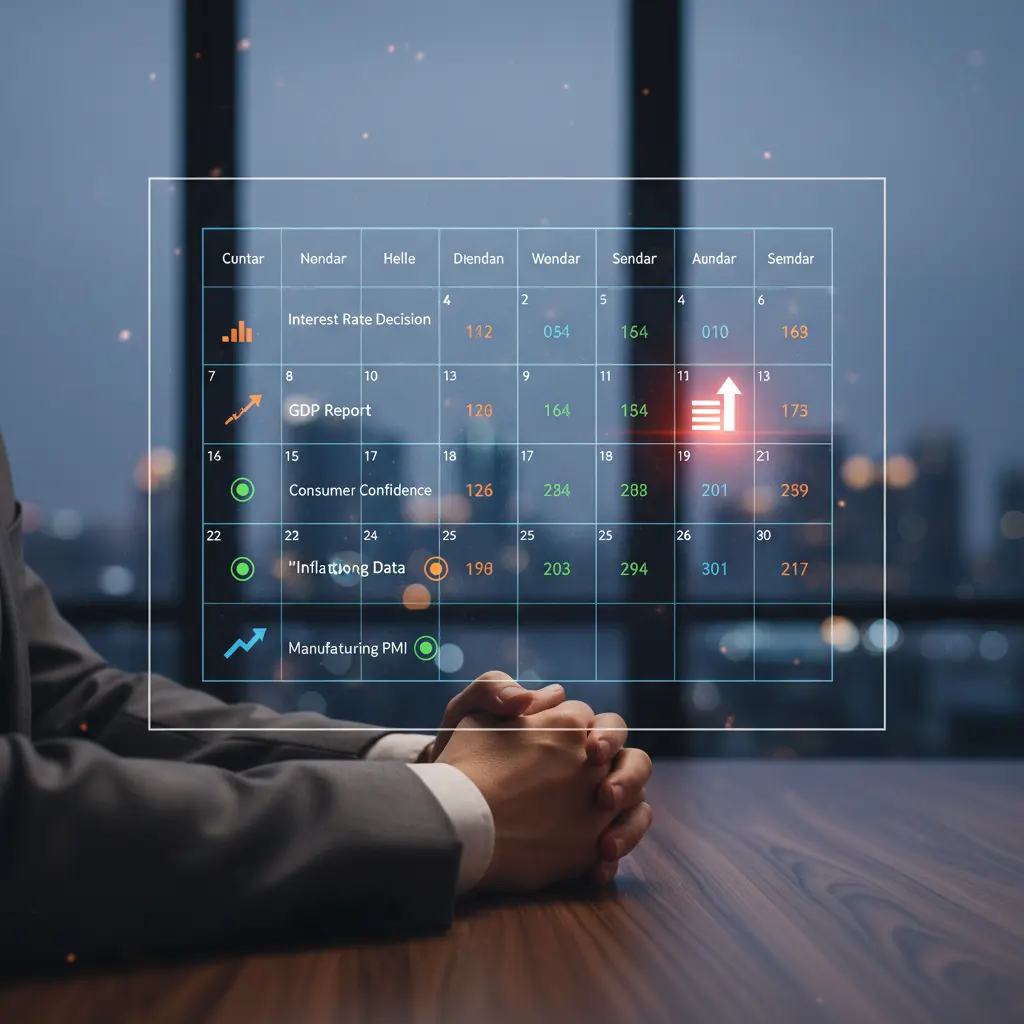
Key Drivers of Market Impact
Several factors amplify a news event's potential to shake markets. The element of surprise is paramount. When an outcome deviates significantly from consensus forecasts, traders react swiftly to reprice assets. For instance, if the market widely expects a central bank to maintain its current interest rate, but it unexpectedly cuts rates, the resulting price action can be dramatic. Another driver is the relevance to economic policy. Events that directly influence monetary policy, fiscal spending, or regulatory frameworks carry more weight. A government announcing a large infrastructure spending package, for example, can boost inflation expectations and currency value. Geopolitical events, such as unexpected election results in a major economy or the outbreak of international conflict, inject uncertainty and risk aversion, leading to sharp moves in safe-haven assets like gold or the Swiss Franc. Finally, the liquidity and participation in the affected market play a role. Major currency pairs like EUR/USD or indices like the S&P 500 will generally see more pronounced moves from significant news than less-traded emerging market assets, simply due to the sheer volume of capital involved.
Types of High-Impact News Events
Understanding the categories of news that tend to move markets helps in preparation. Monetary policy announcements are top-tier drivers. Decisions on interest rates, quantitative easing (QE), or forward guidance from central banks like the Federal Reserve (Fed), European Central Bank (ECB), or Bank of Japan (BOJ) directly influence borrowing costs, inflation expectations, and currency valuations. For example, a hawkish statement from the Fed signaling more aggressive rate hikes can trigger a strong sell-off in bonds and a rally in the US Dollar.
Economic data releases form another critical group. Key indicators include:
- Employment Data: Non-Farm Payrolls (US), Labour Force Survey (Australia), Claimant Count Change (UK). Strong job growth often points to economic strength, while rising unemployment can signal weakness.
- Inflation Data: Consumer Price Index (CPI), Producer Price Index (PPI). Higher-than-expected inflation can prompt central banks to tighten policy, impacting interest rates and currency values.
- GDP Growth: Gross Domestic Product figures indicate the overall health and expansion rate of an economy.
- Retail Sales: These reports show consumer spending, a major component of economic activity.
- Manufacturing and Services PMIs: Purchasing Managers' Index surveys offer a snapshot of the manufacturing and services sectors' health.
Geopolitical events, while less predictable, can cause seismic market shifts. Examples include major elections, trade wars, significant international agreements or disputes, and political instability within key economies. A sudden escalation in trade tensions between the US and China, for instance, could send shockwaves through global equity markets and commodity prices. Corporate earnings reports, especially for large-cap companies or those in influential sectors, can also trigger significant price movements, impacting related industries and overall market sentiment.
Preparing Your Trading Strategy
Effectively trading around high-impact news requires a disciplined approach to risk management and strategy. The most critical step is defining your risk tolerance before any announcement. This means determining your maximum acceptable loss per trade and sticking to it. For news events, it often involves widening your stop-loss orders slightly to account for increased volatility, but never to a point where a single adverse move wipes out a significant portion of your capital. Another key strategy is determining whether to trade the event directly or wait for confirmation. Some traders attempt to anticipate the move before the news, while others prefer to let the initial volatility subside and trade the established trend afterwards. The latter often reduces the risk of being caught in whipsaws.
Here's a breakdown of common approaches:
- Pre-News Trading: Position yourself before the announcement, anticipating the likely market reaction. This is high-risk, high-reward.
- Post-News Trading: Wait for the initial price surge or drop to settle, then join the established direction. This is generally safer.
- News Avoidance: For highly risk-averse traders, staying out of the market during major news releases is a valid strategy to protect capital.
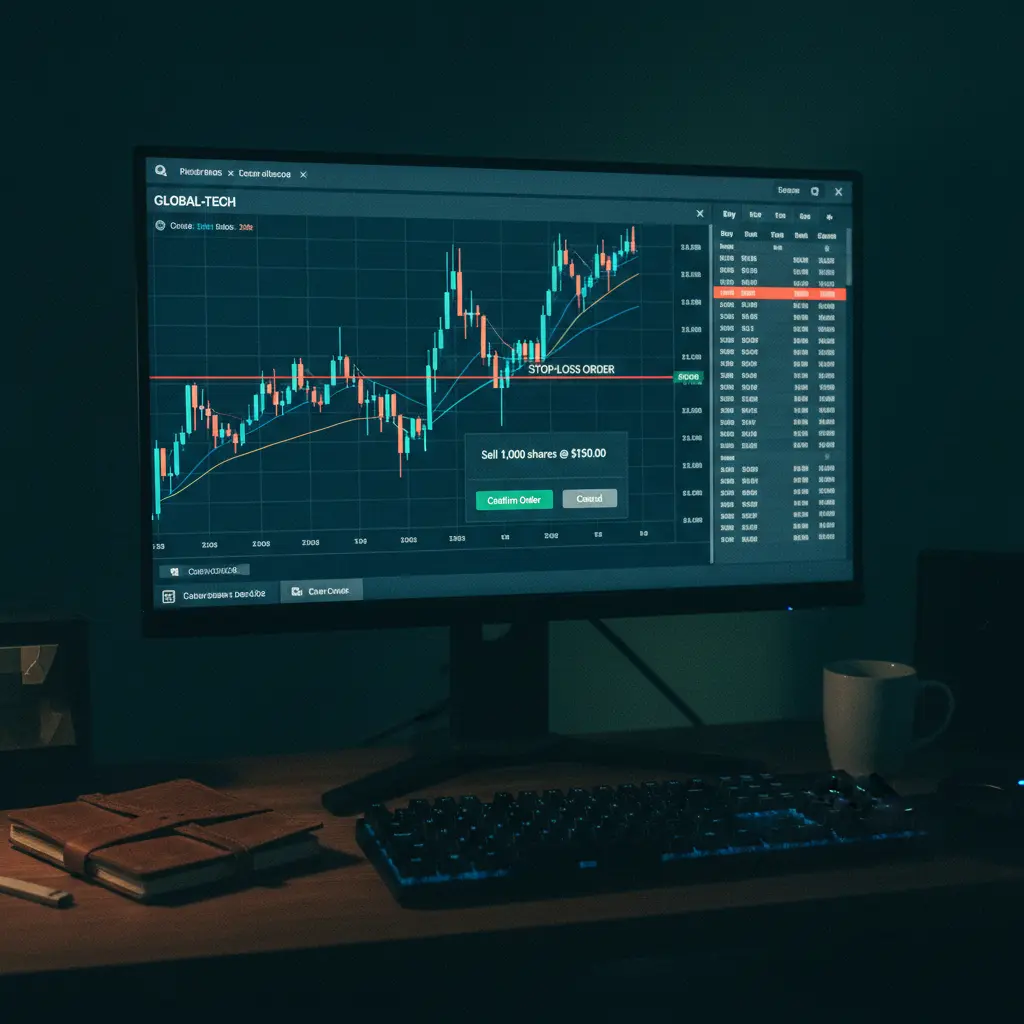
It's also vital to have a clear exit strategy. This includes setting profit targets and stop-loss levels before entering a trade. Utilizing tools like trailing stops can be beneficial during volatile news-driven moves, as they allow profits to run while protecting against reversals. Always ensure your trading platform can handle potential spikes in volume and slippage. Understanding how your broker handles orders during high-volatility periods is also part of preparation.
Scenario Examples
Let's look at how different news events might play out.
Scenario 1: Unexpected US Inflation Data
- Situation: US CPI data is released, showing inflation significantly higher than the 0.3% expected. Actual figure is 0.7%.
- Recommended Option: Consider a short-term long position on USD against a basket of weaker currencies, anticipating the Fed might signal a more aggressive rate hike path. Use a tight stop-loss due to potential volatility.
- Alternative Option: Wait for the initial market reaction to stabilize. If the USD rallies consistently, consider joining the trend.
- What to Avoid: Going aggressively short USD immediately after the data, assuming the Fed will ignore it.
- Explanation: High inflation typically leads to hawkish central bank policy, strengthening the currency.
Scenario 2: UK GDP Announcement
- Situation: UK GDP figures show a contraction (-0.5%) when growth (0.1%) was expected.
- Recommended Option: Look for opportunities to short GBP, especially against currencies of economies with stronger outlooks. Place a stop-loss above recent resistance levels.
- Alternative Option: Monitor Bank of England (BoE) statements following the release. If the BoE downplays the contraction, the GBP might recover.
- What to Avoid: Buying GBP simply because it initially bounces, ignoring the negative fundamental data.
- Explanation: Negative GDP growth signals economic weakness, often leading to currency depreciation.
Scenario 3: ECB Rate Decision
- Situation: The ECB holds interest rates steady as expected, but their accompanying statement is more dovish than anticipated, hinting at future cuts.
- Recommended Option: Consider a short position on EUR/USD, as the dovish signal reduces the currency's appeal.
- Alternative Option: Observe the market's reaction. If other factors are bullish for EUR, wait for clearer bearish confirmation.
- What to Avoid: Ignoring the forward guidance and focusing solely on the unchanged rate.
- Explanation: Central bank forward guidance often has a greater impact than the immediate rate decision itself.
Risk Management in High-Volatility Events
Trading around major news releases is inherently risky, making robust risk management non-negotiable. The first line of defense is position sizing. Never risk more than 1-2% of your trading capital on any single trade, especially during volatile periods. This rule protects you from catastrophic losses. For news events, consider reducing your typical position size further if you decide to trade directly into the announcement. Secondly, understand slippage and requotes. During extreme volatility, your executed price may differ from your intended entry or exit price. Be aware that your stop-loss order might not be filled at the exact level you set, especially if the market gaps significantly. Always check your broker's terms regarding order execution during news events.
Using predetermined stop-loss orders is crucial. These orders automatically close your position if the price moves against you by a specified amount, limiting your potential loss. However, during events like Non-Farm Payrolls, prices can move so rapidly that even a stop-loss might execute at a worse price than anticipated. This is where understanding the potential range of movement becomes important. Some traders prefer to avoid trading altogether during the first 15-30 minutes after a major announcement, letting the initial shockwaves settle before entering a trade. This allows them to assess the market's true direction based on sustained price action rather than knee-jerk reactions.
Key Takeaways and Next Steps
Identifying and trading around high-impact news events is a skill that develops with experience and a commitment to disciplined execution. Focus on events that have a clear link to economic policy and are prone to surprising the market. Always prepare by defining your risk parameters, position size, and exit strategy before the news breaks. Remember that predicting market reactions perfectly is impossible; the goal is to manage risk effectively and position yourself to benefit from probable outcomes. Utilize tools like economic calendars and stay informed about central bank communications and geopolitical developments. Consistent application of these principles will significantly improve your ability to navigate market volatility.
To deepen your understanding and refine your approach, explore these resources:
- Risk Management Basics: Solidify your understanding of core risk control principles.
- The Power of a Trading Journal: Learn how to log your trades and analyze your performance, especially around news events.
- Understanding Forex Economic Indicators: Get a detailed look at the key data driving currency markets.
- PipsAlerts Economic Calendar: Your go-to resource for tracking upcoming high-impact news.
Decision checkpoints
Identify High-Impact News Events for Smarter Trading benefits from clear checkpoints. Use a simple decision table to compare conditions before you execute.
| Situation | Best action | What to avoid |
|---|---|---|
| Calm conditions | Use standard size with planned stop | Adding size without a stronger edge |
| High volatility | Reduce size and widen the review lens | Forcing normal size into unstable price action |
| Post-trade review | Log execution quality and risk accuracy | Judging the trade only by outcome |
Start with the cluster hub. Read market news guides first if you want the broader workflow behind this topic.
Related reading: how to read market news | oil news market impact