Master Your Portfolio Allocation: Stocks, ETFs, Crypto - The PipsAlerts Blueprint
Category: portfolio
Stop guessing, start growing. This isn't your average guide. We're diving deep into strategic stock, ETF, and crypto allocation, built from real market grind. Learn the playbook to build a resilient portfolio that moves with you.
Category hub: portfolio. Primary tool: Portfolio Analyzer.

Table of contents
- Quick Context
- Core Framework
- Execution Checklist
- Common Mistakes
- How To Use PipsAlerts Tool
Quick Context
Look, we all started somewhere. Maybe you bought that hot stock everyone was hyping, or maybe you threw some cash into Bitcoin hoping for the moon. Been there, done that. The market's a beast, and without a solid plan for how you slice up your capital - your stocks, your ETFs, your crypto - you're just gambling. This guide cuts through the noise. We're talking about building a portfolio that's not just about chasing gains, but about managing risk, staying diversified, and actually understanding *why* your money is where it is. Think of it as your financial roadmap, not a lottery ticket.
Core Framework
This isn't about chasing hot tips or predicting the next 1000% breakout (though, hey, if you nail it, congrats). It's about building a robust allocation strategy that can weather the storms and capture the sunshine. Here's the framework we use:
1. **Know Your Risk Tolerance (For Real):** This is non-negotiable. Are you a "sleep at night" investor or a "heart-pounding, adrenaline-fueled" trader? Your risk tolerance dictates how much volatility you can stomach. If you're new, start conservative. You can always dial up the risk later. We're not here to make you rich overnight; we're here to help you build wealth sustainably.
2. **Define Your Goals:** Short-term gains? Long-term wealth accumulation? Retirement funding? Each goal requires a different allocation strategy. A portfolio for a 25-year-old saving for a down payment in 5 years looks wildly different from a 55-year-old planning to retire in 10. Be brutally honest about what you need your money to do.
3. **The Diversification Dance:** This is where most people trip up. "Diversification" doesn't mean buying 10 different tech stocks. It means spreading your capital across different asset classes (stocks, bonds, real estate, crypto), different sectors within those classes (tech, healthcare, energy), and different geographies. Think global. Think beyond just what's trending on Reddit.
* **Stocks:** Individual companies. High growth potential, but higher individual risk. Choose based on fundamentals, sector outlook, and your risk appetite.
* **ETFs (Exchange Traded Funds):** Baskets of assets. They offer instant diversification across sectors, indexes, or even themes. Great for broad market exposure without picking individual winners. Think S&P 500 ETFs, sector-specific ETFs, or even international ETFs.
* **Crypto:** The wild west. High volatility, high potential reward, but also high risk of total loss. Allocation here should generally be a smaller, more speculative piece of the portfolio, especially for most investors. Understand the tech, understand the project, and only invest what you can afford to lose completely.
4. **Asset Allocation Ratios:** This is the "how much" part. There's no single magic number. It's a blend of your risk tolerance, goals, and market outlook. A common starting point might be: 60% stocks, 30% ETFs, 10% crypto for an aggressive profile. Or 50% stocks, 40% ETFs, 10% bonds for a moderate approach. As you gain experience, you'll fine-tune this. Use tools like our Risk Calculator to get a personalized starting point.
5. **Rebalancing is Key:** Markets don't stay still. Your allocation will drift. If tech stocks soar, your tech allocation might become too large. If crypto crashes, it shrinks. Rebalancing means selling winners and buying laggards to bring your portfolio back to your target ratios. This forces discipline and prevents you from being overexposed to assets that have already had their run. Schedule this. Make it a habit, quarterly or semi-annually.
Execution Checklist
Alright, let's get tactical. This is your step-by-step playbook:
* **Step 1: Honest Self-Assessment:** Before you touch a single trade, sit down and map out your risk tolerance and financial goals. No BS. Seriously, grab a notepad. Write it down. If you're unsure, start conservative. You can always adjust.
* **Step 2: Research & Select Assets:** Based on your target allocation, start researching individual stocks, ETFs, and crypto projects. Understand what you're buying. Don't just look at price charts. Look at the company's financials, the ETF's holdings, the crypto project's whitepaper and adoption. Our News Explainer can help you cut through the noise on market events.
* **Step 3: Implement Initial Allocation:** Make your trades. Buy the stocks, the ETFs, the crypto. Get your capital into the positions that align with your target ratios. Start small if you're nervous. You can add more later.
* **Step 4: Track Your Portfolio:** Use a tool to keep an eye on everything. A simple spreadsheet works, but dedicated platforms are better. You need to see your asset allocation, your performance, and how each piece is contributing (or detracting). Check in regularly, but don't obsess daily.
* **Step 5: Schedule Rebalancing:** Set a calendar reminder. Quarterly. Semi-annually. Whatever fits your rhythm. When that date hits, review your current allocation against your target. Execute trades to rebalance. This is crucial for risk management.
* **Step 6: Review & Adapt:** Markets evolve. Your life evolves. Periodically (annually, at least), review your entire strategy. Are your goals still the same? Has your risk tolerance changed? Is your current market outlook different? Adjust your target allocation if necessary. Our Portfolio Analyzer is a great way to visualize performance and identify areas for adjustment.
Common Mistakes
Avoid these pitfalls. They're expensive:
* **Chasing Hype:** Buying an asset *only* because it's going up or someone on social media is screaming about it. This is a recipe for buying the top.
* **Under-Diversification:** Putting too much money into one stock, one sector, or even just stocks and crypto without considering other asset classes.
* **Over-Trading:** Constantly buying and selling, racking up fees and taxes, and often making emotional decisions. Stick to the plan.
* **Ignoring Rebalancing:** Letting your winners run too far and your losers drag you down without a system to correct course.
* **Emotional Investing:** Letting fear or greed dictate your decisions. If you're panicking during a dip, that's a sign your allocation might be too aggressive for your current mindset.
* **Not Understanding What You Own:** Investing in crypto or stocks without knowing the underlying fundamentals or risks. You wouldn't buy a house without looking inside, right?
How To Use PipsAlerts Tool
The PipsAlerts platform is built to support this entire process. Think of it as your command center. Here's how to integrate it:
* **Initial Setup:** Use the Risk Calculator to get a baseline understanding of your risk profile and suggested allocation ranges. This helps you avoid the "analysis paralysis" when you're first figuring out your numbers.
* **Asset Selection:** As you research stocks, ETFs, and crypto, use the platform's data and news integration (like the News Explainer) to validate your choices. Does this asset fit into your chosen sector or theme? What's the sentiment around it?
* **Portfolio Tracking:** Connect your accounts or manually input your holdings into the Portfolio Analyzer. This is where you'll see your real-time allocation drift and performance metrics. It gives you the clarity needed to know *when* to rebalance.
* **Journaling:** Use the Trading Journal Analyzer to record *why* you made certain allocation decisions, especially for more speculative plays like crypto. This builds a feedback loop. Reviewing your journal helps you learn from both wins and losses, refining your strategy over time.
* **Rebalancing Alerts:** Set up custom alerts within PipsAlerts to notify you when your portfolio drifts beyond certain thresholds for specific asset classes. This takes the guesswork out of *when* to rebalance and ensures you stick to your disciplined approach.
Building a smart portfolio allocation isn't about luck; it's about strategy, discipline, and the right tools. Start implementing this framework today. Your future self will thank you.
FAQ
What is portfolio allocation and why is it important?
Portfolio allocation is the process of deciding how to divide your investment capital among different asset classes like stocks, ETFs, and cryptocurrencies. It's crucial because it directly impacts your portfolio's risk and return potential. Proper allocation helps you manage volatility, achieve diversification, and align your investments with your financial goals.
How do I determine the right allocation for stocks, ETFs, and crypto?
Your ideal allocation depends on your personal risk tolerance, financial goals (short-term vs. long-term), and time horizon. Generally, a more aggressive investor might allocate more to stocks and crypto, while a conservative investor might favor ETFs and bonds. It's a balancing act. Tools like a risk calculator and thorough research are key.
How often should I rebalance my portfolio?
Rebalancing frequency varies, but common practices include quarterly or semi-annually. The goal is to bring your portfolio back to its target allocation ratios. If one asset class grows significantly and becomes an oversized portion of your portfolio, you'll sell some of it and buy more of the underperforming assets to maintain your desired balance.
What are the biggest mistakes beginners make with portfolio allocation?
Common mistakes include chasing hype without research, under-diversifying by putting too much into a single asset or sector, emotional decision-making (fear/greed), and failing to rebalance. Many also invest without understanding the underlying assets, which is a major risk.
Author
Author: PipsAlerts Editorial Desk
Updated: 2026-03-10
Disclaimer
This article is educational content, not investment advice. Trading and investing involve risk of loss.
Related tools
AI Portfolio Analyzer
Allocation and concentration checks
AI Trading Journal Analyzer
CSV analytics and behavior metrics
AI Risk Calculator
Sizing and risk-reward precision
AI Market News Explainer
Headline and macro context breakdown
Related articles
portfolio
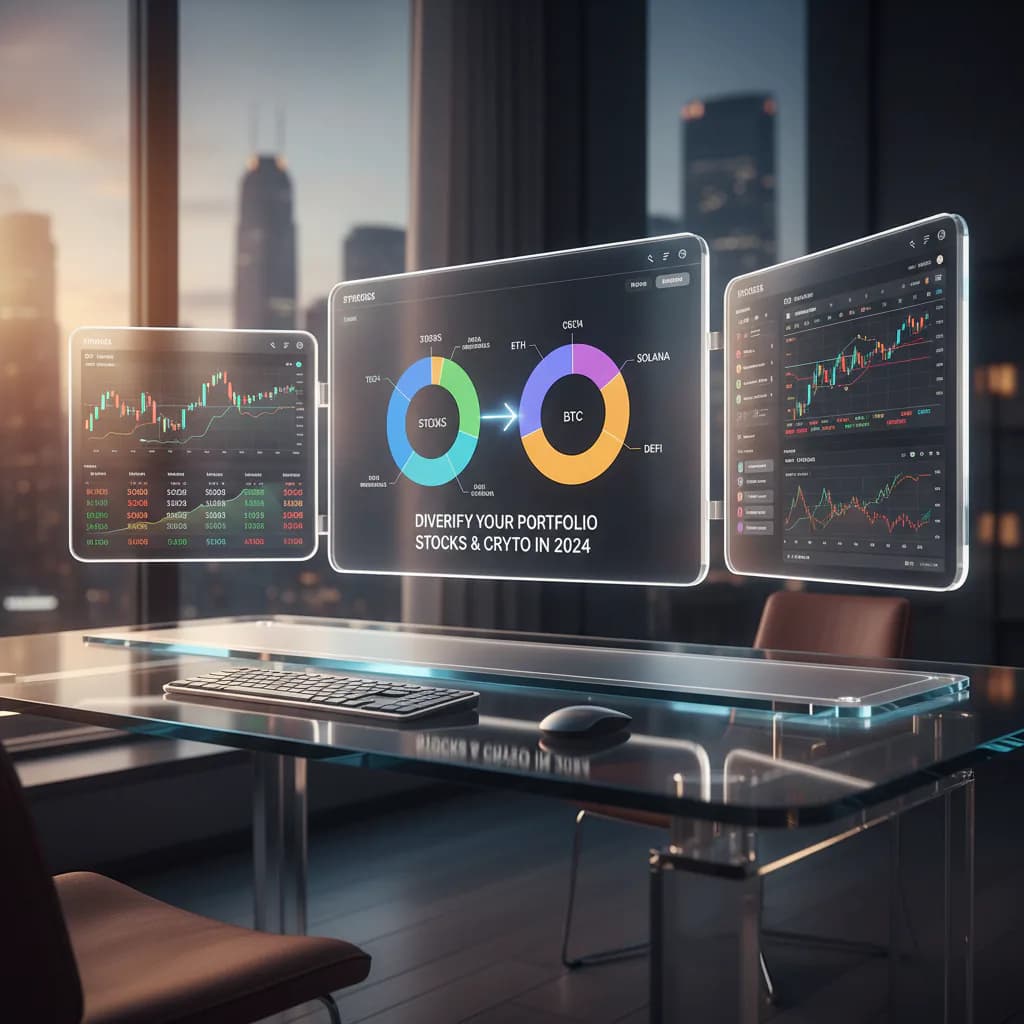
Diversify Your Portfolio: Stocks & Crypto in 2024
Master the art of blending stocks and cryptocurrencies for a resilient portfolio. Learn strategic allocation, risk management, and how to leverage tools like PipsAlerts to navigate market volatility. This guide is built for serious traders seeking to optimize their holdings.
Read guide
portfolio
Diversification Score Explained: The Trader's Edge for Smarter Portfolio Building
Stop guessing, start knowing. Learn how our Diversification Score cuts through portfolio noise, reveals hidden risks, and guides you to truly balanced wealth. This isn't theory; it's battlefield-tested strategy.
Read guide
portfolio
How Much BTC Should Be In Your Portfolio? A Trader's Real-Talk Guide
Tired of the crypto noise? As a trader who's seen cycles, I'll cut through the hype. Learn how to size your Bitcoin position based on YOUR risk, not some guru's whim. Let's get tactical.
Read guide
portfolio
What Is Portfolio Concentration Risk?
How concentration risk builds, how to measure it, and how to reduce it without over-diversifying.
Read guide
portfolio
Master Portfolio Diversification: Your Edge with PipsAlerts
Stop guessing about your portfolio. Learn how to build a rock-solid, diversified portfolio that rides market waves, not gets crushed by them. This guide breaks down the real tactics top traders use, and how PipsAlerts puts them in your hands.
Read guide
portfolio
Portfolio Overlap Analysis: Find Hidden Concentration Risk
How overlap between stocks, ETFs, and crypto creates hidden concentration and weaker diversification.
Read guide